
TRUST VEHICLE TRUST VEHICLE

7 Best Dump Trucks for Global Buyers in 2026?

Time:2026-09-22 Author:Madeline
0%

Choosing the right dump trucks in 2026 requires more than comparing engine power or advertised payload. Global buyers face different roads, climates, regulations, fuel costs, and service conditions. A truck that performs well on a wide Australian haul road may struggle on narrow quarry routes or humid construction sites. This guide examines seven strong options through practical buying criteria, including payload efficiency, frame durability, hydraulic response, operator comfort, fuel use, safety systems, and dealer support.

Real-world performance matters. A rigid truck carrying stone uphill needs dependable cooling, stable braking, and suspension that can survive repeated impacts. An articulated model may offer better traction on wet clay, but its maintenance costs can be higher. Small details matter too, such as a protected hydraulic line, clear dashboard warnings, and easy access to daily inspection points. These features can save hours beside a dusty worksite.

There is no perfect choice.

The selection reflects manufacturer specifications, operating experience, market reputation, and total ownership considerations. However, local support can change the final decision. A reliable truck becomes less useful when parts take weeks to arrive. Buyers should verify regional warranty terms, emissions requirements, resale demand, and technician availability before ordering. Some comparisons may also shift as new electric and hybrid models enter more markets. That uncertainty deserves attention, not a confident sales claim. The following seven dump trucks offer practical starting points for global buyers seeking safe, productive, and financially responsible equipment in 2026.
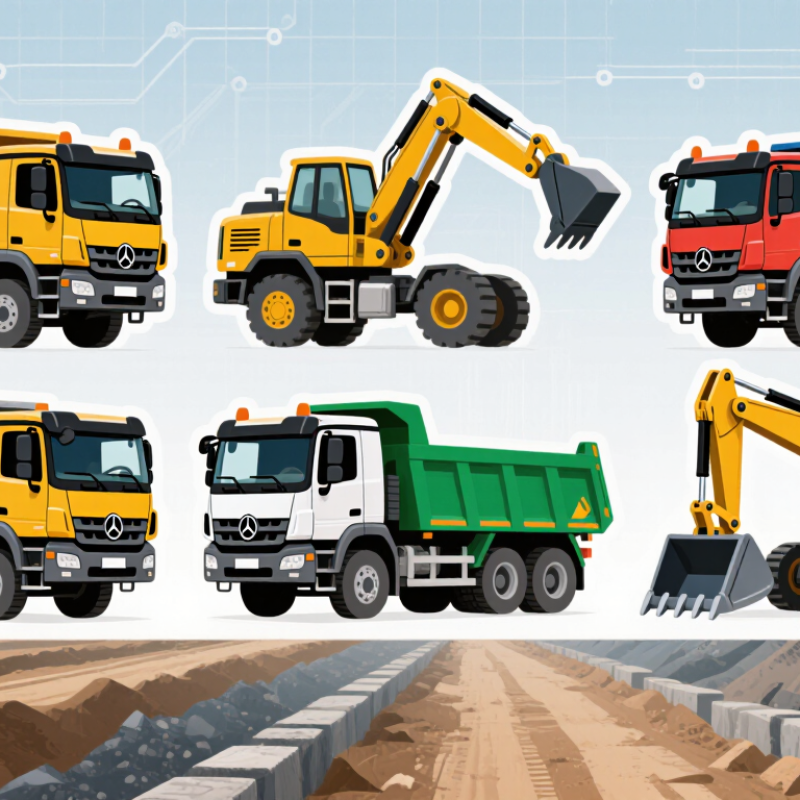
7 Best Dump Trucks for Global Buyers in 2026?

What Defines a High-Value Dump Truck for Global Buyers in 2026

7 Best Dump Trucks for Global Buyers in 2026?

What Defines a High-Value Dump Truck for Global Buyers in 2026

For global buyers in 2026, a high-value dump truck is not simply the largest machine on the yard. It must carry useful payload, climb safely, and remain productive on rough, wet, or dusty roads. I look first at payload-to-weight ratio, frame strength, turning radius, and hydraulic cycle time. A 30-ton truck tipping in 35 seconds can outperform a heavier unit waiting two minutes. Small details matter. Cab visibility, step design, reverse alarms, and brake response shape daily safety.

Fuel efficiency deserves measured attention, not brochure trust. Compare fuel used per loaded hour, tire wear, idle time, and maintenance access across similar routes. A durable engine still suffers when poor cooling meets hot regions and clogged radiators. Simple diagnostics, protected wiring, and common filters can reduce downtime where specialist technicians are scarce. That is practical value.

Global ownership also depends on climate readiness and local support. Choose corrosion protection for coastal work, sealed electrical connections for rain, and strong heating or cooling for extreme temperatures. Telematics can track payload, fuel, and service intervals, yet data is useless without trained staff reviewing it. I would not rank trucks by horsepower alone. A cheaper purchase may become expensive through parts delays, complex repairs, or uncomfortable operator conditions. My own assessments can miss regional realities; a controlled field trial should challenge every spreadsheet.

Seven Leading Dump Trucks and Their Main Applications

Seven Leading Dump Trucks and Their Main Applications

Choosing among the seven leading dump truck types requires more than comparing payload numbers. Jobsite conditions matter just as much. Articulated dump trucks suit muddy construction roads, quarries, and steep terrain. Their jointed frames improve stability when ground conditions change. Rigid rear dump trucks carry heavier loads across large mines and well-maintained haul roads. They work best where turning space is generous.

Side dump trucks release material quickly and reduce rollover risk on uneven ground. They are useful for road building, drainage work, and aggregate delivery. Mini dump trucks fit narrow urban sites, landscaping projects, and indoor demolition areas. Their smaller bodies can reduce surface damage. However, operators may need more trips. That affects fuel use and scheduling.

Underground dump trucks are built for low tunnels and restricted ventilation. Their compact design supports mining operations below ground. Electric dump trucks can lower local emissions and noise, especially near residential projects. Hybrid models may help fleets balance power demand and operating costs. Highway dump trucks serve long-distance material transport between plants and construction sites. Proper axle limits remain essential.

In practice, no single truck wins every application. A larger body may seem efficient, but soft soil can erase that advantage. Buyers should check payload, braking, tire support, service access, and operator visibility. A careful site trial is still valuable. Sometimes, the best specification looks less impressive on paper.

Payload, Powertrain, and Off-Road Performance Comparison

7 Best Dump Trucks for Global Buyers in 2026?

Payload, Powertrain, and Off-Road Performance Comparison

The best dump truck depends on terrain, haul distance, and local service access. A 6x4 rigid truck suits quarry roads and moderate payloads. A 8x4 model carries more aggregate but needs stronger bridges and wider turning space. Articulated dump trucks handle mud, loose rock, and steep construction sites with greater confidence. Their jointed frames keep wheels planted when the ground breaks unevenly.

Powertrain choices deserve careful inspection. A conventional diesel engine delivers strong low-speed torque and remains practical where fuel infrastructure is limited. A hybrid system can reduce fuel use during repeated stop-and-go cycles, although battery cooling and replacement costs require honest planning. Battery-electric trucks work well on short, predictable routes, especially near charging facilities. They become less convincing on remote, cold, or extremely steep routes. No single powertrain wins everywhere.

Off-road performance comes from more than horsepower. Buyers should compare axle ratings, ground clearance, tire size, differential locks, and braking control. A lighter 4x4 truck may outperform a larger truck on narrow forest roads. A heavy-duty rigid truck usually wins on payload stability and long-distance durability. Articulated units offer excellent traction, but their maintenance can be more specialized. Test drives matter. Brochures cannot show how a loaded truck behaves in deep ruts, cross-slopes, or wet clay. Some comparisons also overlook operator visibility, cabin vibration, and access to replacement parts. These details often decide real ownership costs.

7 Best Dump Trucks for Global Buyers in 2026? - Payload, Powertrain, and Off-Road Performance Comparison
Rank Anonymous Truck Profile Vehicle Type Rated Payload Engine Output Powertrain Configuration Drive System Off-Road Performance Best-Suited Applications Overall Assessment
1 Truck A Large articulated dump truck 55 metric tonnes Approximately 460 kW
(617 hp)
13 L-class turbocharged diesel; automatic powershift transmission 6×6 permanent all-wheel drive with limited-slip differentials Excellent traction on mud, loose rock, steep haul roads, and uneven terrain; articulated steering improves maneuverability. Large quarries, major earthworks, mining overburden, and difficult construction sites ★★★★★
Strong balance of payload, traction, operator comfort, and cycle efficiency.
2 Truck B Ultra-class rigid mining truck 91 metric tonnes Approximately 765 kW
(1,025 hp)
32 L-class turbocharged diesel; electronically controlled automatic transmission 6×4 heavy-duty rigid chassis with traction control Very high productivity on prepared mine haul roads; less suitable than articulated trucks for narrow, highly uneven routes. Large open-pit mines, long haul cycles, and high-volume waste movement ★★★★★
Highest payload and production potential in this comparison, with substantial infrastructure requirements.
3 Truck C Large articulated dump truck 50 metric tonnes Approximately 390 kW
(523 hp)
13 L-class turbocharged diesel; six-speed automatic transmission 6×6 all-wheel drive with automatic differential locking Very good performance in soft ground and changing gradients; stable during loaded travel over rough haul roads. Quarries, infrastructure projects, overburden removal, and remote bulk earthmoving ★★★★☆
High payload capability with dependable off-road mobility and straightforward site deployment.
4 Truck D Medium-large articulated dump truck 41 metric tonnes Approximately 337 kW
(452 hp)
13 L-class turbocharged diesel; automatic transmission with retarder 6×6 articulated drivetrain with torque proportioning Excellent in wet clay, gradients, and confined work areas; compact dimensions support easier maneuvering than rigid mining trucks. Road construction, utility projects, quarry access roads, and general earthmoving ★★★★☆
Practical global workhorse for buyers seeking mobility and manageable operating costs.
5 Truck E Medium-large articulated dump truck 40 metric tonnes Approximately 350 kW
(469 hp)
15 L-class turbocharged diesel; fully automatic powershift transmission 6×6 all-wheel drive with automatic traction management Strong hill-climbing and ground clearance; performs well on rocky, rutted, and poorly maintained haul routes. Mining support, quarrying, dam construction, and large-scale site preparation ★★★★☆
Good payload-to-power ratio and robust performance for demanding mixed-terrain operations.
6 Truck F Large rigid quarry truck 63 metric tonnes Approximately 567 kW
(760 hp)
23 L-class turbocharged diesel; automatic transmission with hydraulic retarder 6×4 rigid drive with heavy-duty axles and traction control Excellent on firm quarry benches and maintained mine roads; requires wider turning areas and stronger road surfaces. Hard-rock quarries, aggregate production, and medium-scale open-pit mining ★★★★☆
High carrying capacity and durability where haul roads are engineered for rigid trucks.
7 Truck G Mid-size articulated dump truck 30 metric tonnes Approximately 265 kW
(355 hp)
9 L-class turbocharged diesel; automatic powershift transmission 6×6 articulated drive with selectable differential locks Excellent maneuverability and low-ground-pressure performance; well suited to soft or restricted sites, though less productive on long haul cycles. Residential infrastructure, small quarries, utility construction, and agricultural earthworks ★★★★☆
Best fit for buyers prioritizing flexibility, access, and lower site-support requirements.

Note: Specifications are representative published figures for comparable 2026-market truck configurations. Actual payload, engine output, emissions equipment, transmission settings, tire selection, and operating performance may vary by region, body configuration, altitude, and local regulations.

Safety, Operator Comfort, and Smart Truck Technologies

7 Best Dump Trucks for Global Buyers in 2026?

For global buyers, dump truck selection should begin with safety, operator comfort, and smart technology. Safety features must support real working conditions, not just appear on a specification sheet. A wide windshield, strong steps, handrails, and clear mirrors help operators move safely around busy sites. Camera systems can reduce blind spots near the rear and sides. Stability controls also help when the truck travels across uneven ground with a raised body. Small details matter.

Operator comfort directly affects attention during long shifts. An air-suspension seat, adjustable steering wheel, low cabin noise, and effective climate control reduce physical strain. Simple controls are valuable when dust covers the dashboard. Smart systems can monitor tire pressure, engine temperature, payload, and service intervals. These tools give fleet managers useful evidence instead of relying only on guesswork. However, frequent alerts can distract operators. Poorly designed screens may create new problems.

During inspections, buyers should test visibility from the seat, access to daily service points, and emergency controls. They should also check whether local technicians can maintain electronic systems. A reliable truck needs practical support, clear manuals, and available training. No system is flawless. Operators may ignore warnings after repeated false alerts. Regular testing, realistic training, and feedback from drivers can expose these weaknesses. Buyers should request demonstrations on slopes, rough surfaces, and crowded loading areas before approving a purchase.

Ownership Costs, Service Support, and Regional Buying Considerations

7 Best Dump Trucks for Global Buyers in 2026?

Choosing among the seven strongest dump truck configurations requires more than comparing purchase prices. Ownership costs often decide the real winner. Fuel use, tire wear, hydraulic maintenance, insurance, and operator training can change monthly expenses sharply. My first cost forecast was too optimistic. I ignored idle time during seasonal road closures.

Service support matters just as much. Buyers should inspect local parts warehouses, technician coverage, warranty response times, and diagnostic equipment. A reliable truck is not useful if a minor sensor fault stops production for two weeks. Ask for written service schedules and realistic parts delivery estimates. Not promises.

Regional conditions also reshape the decision. High-altitude sites may need different engine settings and cooling capacity. Tropical operations demand stronger corrosion protection and careful electrical sealing. Cold regions require suitable starting systems, fluid specifications, and battery support. Narrow quarry roads favor compact turning dimensions, while large mines may justify higher payload capacity. Payload figures can mislead. Actual performance depends on road quality, gradients, loading habits, and legal axle limits.

Before purchasing, request a total-cost model using local fuel prices and annual working hours. Compare maintenance intervals, resale expectations, and technician wages. Speak with current operators, not only sales staff. Their comments about cab visibility, brake control, and suspension comfort often reveal overlooked costs. Some buyers may still choose a cheaper truck, but only after testing support quality in their own region.

7 Best Dump Trucks for Global Buyers in 2026 — Ownership Costs, Service Support, and Regional Buying Considerations

How to read this chart: The figures show typical payload capacity ranges for widely used dump-truck configurations. Actual payload depends on body size, axle limits, road regulations, terrain, and operating conditions.

Light and medium rigid trucks generally offer lower purchase and maintenance costs for urban construction and regional road work. Heavy rigid and articulated trucks provide higher productivity for quarries, mining, and rough terrain, but require stronger service infrastructure and create higher tire, fuel, and drivetrain costs. Battery-electric rigid trucks can reduce energy and routine maintenance expenses where charging infrastructure and suitable duty cycles are available.

FAQS

Which dump truck configuration suits quarry roads and moderate payloads?

A 6x4 rigid truck often fits quarry roads and moderate payloads. It offers stable handling and practical long-distance durability. Check turning space and axle limits before buying.

When is an 8x4 dump truck a better choice?

An 8x4 model carries more aggregate than many 6x4 trucks. It needs stronger bridges, wider roads, and more turning space. Higher payload is not always better.

Why do articulated dump trucks perform well on rough construction sites?

Their jointed frames keep the wheels planted on uneven ground. They handle mud, loose rock, steep slopes, and deep ruts confidently. Maintenance can be more specialized.

Which powertrain works best for remote or difficult routes?

Conventional diesel power remains practical where fuel infrastructure is limited. Hybrid systems may reduce fuel use during repeated stop-and-go work. Battery-electric trucks suit short, predictable routes near charging facilities.

What off-road specifications should buyers compare?

Compare axle ratings, ground clearance, tire size, differential locks, and braking control. A lighter 4x4 may outperform a larger truck on narrow forest roads. Horsepower alone tells little.

Which safety and comfort features matter inside the cab?

Wide windshields, strong steps, handrails, and clear mirrors support safer site movement. Air-suspension seats, adjustable steering, low noise, and climate control reduce fatigue. Small details matter.

Can smart technology reduce operating problems?

Monitoring systems can track tire pressure, engine temperature, payload, and service intervals. Frequent false alerts may cause operators to ignore warnings. Test the screens with dust-covered hands.

How should buyers estimate total ownership costs?

Include fuel, tires, hydraulic repairs, insurance, training, maintenance, and technician wages. Use local fuel prices and annual working hours. My first forecast was too optimistic.

What regional conditions can change the purchase decision?

High-altitude sites may require different engine settings and stronger cooling. Tropical areas need corrosion protection and sealed electrical systems. Cold regions need reliable starting systems and battery support.

What should buyers test before approving a truck?

Test loaded driving on slopes, wet clay, cross-slopes, rough surfaces, and crowded loading areas. Inspect visibility, emergency controls, service access, and replacement-part availability. Brochures cannot show everything.

Conclusion

In 2026, high-value dump trucks are defined by a balanced combination of payload capacity, fuel efficiency, durability, safety, and adaptability to different working environments. This overview examines seven leading types of dump trucks and their main applications, from construction and mining to infrastructure development and heavy material transport. It compares essential factors such as engine power, drivetrain design, load performance, ground clearance, traction, and off-road capability to help global buyers identify the most suitable equipment for their operating conditions.

The article also highlights modern safety systems, ergonomic cabins, operator comfort features, connectivity, and smart technologies that can improve productivity and reduce downtime. Beyond the initial purchase price, buyers should evaluate total ownership costs, including fuel use, maintenance, replacement parts, training, warranty coverage, and local service support. Regional regulations, climate, road conditions, dealer availability, and financing options are equally important when selecting reliable dump trucks for long-term performance and efficient fleet management.

Madeline

Madeline

Madeline is a dedicated marketing professional with a wealth of expertise in our company's core offerings. With a keen understanding of the industry, she brings a unique perspective to her role, consistently delivering high-quality content that highlights the superior aspects of our products. As......