TRUST VEHICLE
TRUST VEHICLE
TRUST VEHICLE
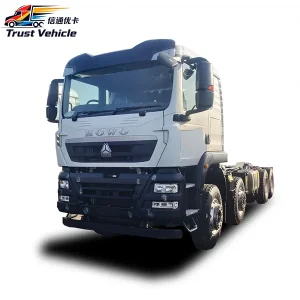
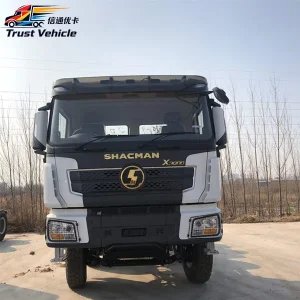
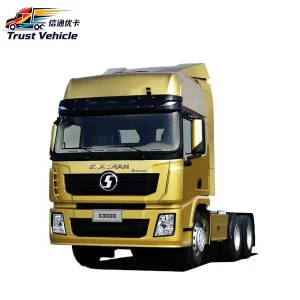
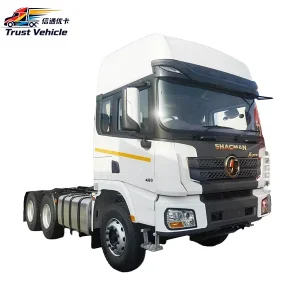
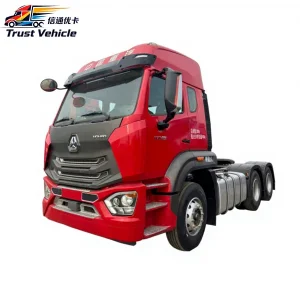
In the heavy-duty logistics and high-load industrial transportation sectors, the configuration of the prime mover dictates operational capability. The 8*4 tractor truck represents a pinnacle of chassis structural design, utilizing four axles in total: two steering axles at the front and two driving axles at the rear. This configuration distributes heavy gross combination masses (GCM) across twelve contact points, optimizing axle load distribution to comply with strict international highway weight regulations while dramatically improving traction under severe haulage conditions.
Historically, the 6x4 tractor configuration served as the global standard for heavy transport. However, as infrastructure projects expand globally and payload requirements scale exponentially, fleet operators require tractors that offer superior safety profiles and higher payload caps. The integration of dual-steering front axles in 8*4 setups enables precise steering control even when hauling maximum cargo limits. The twin steer mechanism operates via mechanical-hydraulic linkage, distributing lateral stresses during turns and significantly reducing front-tire blowout risks.
Modern 8*4 tractor trucks are engineered with advanced mechanical interfaces, including heavy-duty parabolic leaf suspension or multi-bag air suspension systems. Air suspension enables fine-tuned chassis height adjustments, critical for coupling with complex low-bed, flatbed, or multi-axle modular trailers. With high-performance powertrains generating between 400 HP and over 560 HP, coupled with automated manual transmissions (AMT), these machines are designed to sustain continuous operation over mountainous terrains, unpaved mining access roads, and long-haul intercontinental corridors.
Global procurement directors and engineering procurement contractors (EPCs) operate in environments defined by thin margins and strict deadlines. When sourcing 8*4 tractor trucks, their assessment frameworks go far beyond initial capital expenditure (CAPEX). Total Cost of Ownership (TCO) dominates the procurement checklist. This encompasses fuel economy indexes, scheduled maintenance cycles, aftermarket spare parts availability, and the residual value of the asset.
In regions like Sub-Saharan Africa, Central Asia, and Latin America, operational conditions demand machinery that combines mechanical resilience with relative diagnostic simplicity. Fleet operators in these developing markets frequently opt for certified pre-owned or meticulously refurbished Chinese commercial vehicles. These tractors offer matching durability to European counterparts at a fraction of the cost, making them highly attractive for high-capital infrastructure projects.
Additionally, environmental compliance plays an increasingly central role. Sourcing managers must align their fleets with regional regulatory benchmarks. While Euro V and Euro VI compliant tractors are standard in Europe and the Americas, Euro II or Euro III options remain highly sought after in regions with lower fuel quality specifications or fewer emission limits. The ability to supply customized engine calibrations that match local diesel sulfur content is a vital capability of top-tier factories and exporters.
The rise of China as the leading hub for commercial vehicle manufacturing is driven by massive industrial clusters and advanced manufacturing technologies. Factories in Northern China utilize robotic welding cells, cathode electrophoretic coating lines for corrosion resistance, and digitalized quality tracking systems that capture torque values for every critical chassis bolt.
As an established industry leader, Shijiazhuang Trust Vehicle Industry Co.,Ltd embodies these advantages. Established in 2025 and headquartered in Shijiazhuang, Hebei Province, the company is a comprehensive enterprise focusing on the export of used commercial vehicles, used cars, and used engineering vehicles. Relying on the advantages of the largest commercial vehicle industry cluster in northern China, the company integrates high-quality vehicle sources in the Beijing-Tianjin-Hebei region.
Shijiazhuang Trust Vehicle Industry Co.,Ltd is committed to providing global customers with cost-effective vehicle procurement, maintenance and modification, export logistics, and one-stop after-sales support services. The company's presence in the Beijing-Tianjin-Hebei cluster allows it to source highly specified, well-maintained fleets directly from corporate operations. By implementing a standardized multi-point diagnostic check, replacing critical wear components with OEM parts, and performing custom alterations (such as fifth-wheel upgrades or secondary fuel tank installations), they ensure that every vehicle delivered is optimized for its final operating environment.
To assist engineering teams in making data-driven procurement decisions, the table below provides a side-by-side comparison of standard heavy-duty configurations, detailing mechanical advantages and performance envelopes.
| Parameters | 8*4 Heavy Tractor Configuration | 6*4 Standard Prime Mover | 4*2 Regional Haulage Unit |
|---|---|---|---|
| Gross Combination Mass (GCM) | 80,000 kg – 120,000 kg+ | 40,000 kg – 60,000 kg | 18,000 kg – 35,000 kg |
| Axle Layout & Steering | Dual Front Steering, Dual Rear Drive | Single Front Steering, Dual Rear Drive | Single Front Steering, Single Rear Drive |
| Suspension Options | Heavy Parabolic Leaf / Hydro-Pneumatic | Multi-leaf Spring / Air Suspension | Air Suspension / Parabolic Springs |
| Terrain Capability | Exceptional (Mining, Off-road, Heavy Haulage) | High (Highway, Mild Off-road) | Medium-Low (Paved Roads, City Yards) |
| Gradeability (Full Load) | Up to 35% incline capacity | Up to 22% incline capacity | Up to 12% incline capacity |
Understanding where and how these mechanical giants are deployed highlights their necessity across global industries:
A. Mountainous Mining Operations (e.g., Central Asian & South American Andes): Transporting extracted mineral ores from high-altitude sites to processing facilities requires high tractive effort and engine braking reliability. The 8*4 tractor chassis, when configured with planetary reduction hubs and hydraulic retarders, controls downslopes while resisting cabin sway, preventing tipping on uneven gravel roads.
B. Heavy Infrastructure and Concrete Logistics (e.g., Middle Eastern Urbanization Projects): Hauling massive pre-cast concrete pillars, steel beams, and heavy machinery to city sites requires navigating tight spaces under high load. The double-steer axle layout enables a smaller turning radius compared to long-wheelbase single-steer variants, ensuring precise control within crowded construction zones.
C. Cross-Border Heavy Freight Corridors (e.g., African Development Corridors): Transporting consumer goods, construction supplies, and agricultural equipment across long national borders presents road condition challenges. The twelve-wheel layout distributes weight, protecting the truck's components and reducing highway wear, which limits structural damage risks and avoids regulatory weight-station fines.