
TRUST VEHICLE
China’s delivery cargo truck market is broad, competitive, and easy to misunderstand. A polished cab does not guarantee dependable service. Real performance appears during early-morning loading, narrow urban turns, and repeated stops in summer heat.
This introduction examines ten leading Chinese manufacturers of delivery cargo truck models. The comparison considers payload capacity, wheelbase options, fuel or battery systems, body flexibility, cabin comfort, safety equipment, and after-sales support. It also considers practical ownership details, including charging access, spare-parts availability, maintenance intervals, and driver feedback. These factors matter more than impressive brochures.
Martin Daum, former chief executive of Daimler Truck, has said, “Transportation is the backbone of our economy and society.” His observation explains why commercial trucks deserve careful evaluation. A failed vehicle can delay food, parcels, construction materials, or medical supplies. Small reliability problems become expensive when fleets operate every day.
The manufacturers discussed here serve different operating conditions. Some focus on compact electric trucks for city deliveries. Others produce diesel models for longer routes, heavier loads, or rural roads. Several companies offer broad model ranges, while smaller specialists may provide better customization. That difference is easy to overlook.
This is not a perfect ranking. Market data changes, export support varies, and published specifications may not reflect real fleet performance. Buyer experience can also differ between regions and dealers. Readers should verify certifications, warranty terms, local service coverage, and independent test results before purchasing. The strongest choice is rarely the most famous name. It is the truck that fits the route, load, budget, and working conditions.
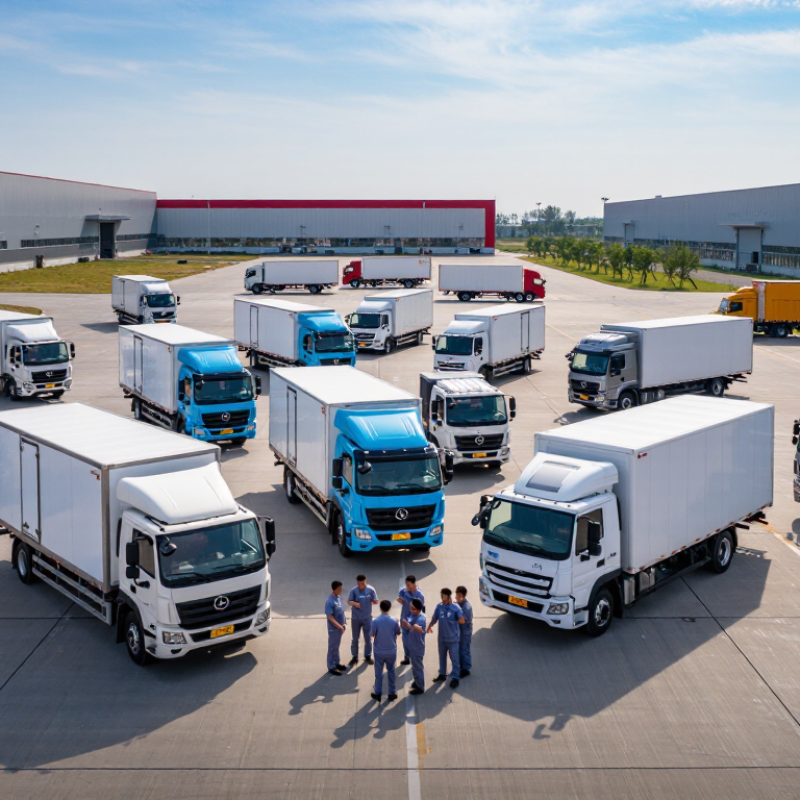
A leading delivery cargo truck manufacturer in China must solve daily logistics problems, not only build large volumes. The China Association of Automobile Manufacturers reported 4.031 million commercial vehicles sold in 2023, up 22.1% year on year. This scale creates intense pressure on factories, suppliers, and service networks. Strong manufacturers combine stable production, useful payload design, and dependable braking systems. They also test vehicles under heat, rain, overloaded routes, and frequent stop-start driving.
Energy efficiency now matters greatly. The International Energy Agency’s Global EV Outlook 2024 identifies China as the largest electric truck market. A capable manufacturer should therefore offer efficient powertrains, practical battery ranges, and clear charging guidance. Battery safety data should be traceable. Software updates should not interrupt delivery schedules. After-sales support is equally important, especially when a truck is working six days each week. A low purchase price can hide higher tire, energy, or maintenance costs. No factory gets every decision right.
Tips: Compare total operating cost over five years. Ask for verified payload and range figures. Check parts availability near your delivery routes. Review warranty limits carefully. Request real fleet-use records, not only laboratory results. Also inspect cabin visibility, loading height, reversing alarms, and driver comfort. These details seem small, but they shape safety and productivity. A manufacturer that openly discusses failures may deserve more trust than one showing only perfect test results.
Ranking China’s top delivery cargo truck manufacturers requires more than annual sales. The China Association of Automobile Manufacturers reported 4.03 million commercial vehicles sold in 2023, up 22.1%. This growth shows market strength, but volume alone can mislead. A credible ranking should compare heavy, medium, and light truck performance separately.
Payload matters.
So does uptime.
The key criteria include verified delivery volume, fleet operating cost, fuel or electricity consumption, and average maintenance intervals. The China Automotive Technology and Research Center emphasizes safety testing, energy efficiency, and product consistency in commercial vehicle evaluation. These measures help assess real working conditions, such as urban stop-and-go routes, refrigerated cargo, and long-distance logistics.
Warranty response and parts availability also deserve heavy weighting. A truck that waits days for a component can erase its apparent purchase advantage.
The International Energy Agency reported strong growth in China’s electric commercial vehicle market in recent years, so charging compatibility should enter the ranking. Battery durability, thermal management, range under payload, and charging access require field evidence.
However, published data are not always comparable. Some manufacturers report test-cycle efficiency, while operators experience different results in winter traffic or mountainous regions. That gap needs reflection.
A practical top-10 list should combine audited sales data, independent road tests, fleet interviews, service-network coverage, resale performance, and total cost of ownership over at least three years. Safety recalls and complaint-resolution records should also reduce a manufacturer’s score.
Profiles of China’s Top 10 Delivery Cargo Truck Manufacturers
China’s leading delivery cargo truck manufacturers serve urban, regional, and long-distance distribution needs. Their product ranges include compact vans, light-duty trucks, refrigerated bodies, and electric cargo vehicles. The first manufacturer focuses on compact urban trucks. Its models suit narrow streets, frequent stops, and limited loading zones. The second specializes in light-duty vehicles with reinforced frames and practical cabin layouts. Fleet operators often value easy maintenance over attractive styling.
The third manufacturer develops medium-duty trucks for regional routes. Its strengths include larger payloads, stable suspension systems, and improved driver visibility. The fourth is known for refrigerated delivery solutions. Insulated panels, temperature monitoring, and door sealing receive close attention. The fifth concentrates on electric cargo trucks for short-distance distribution. Battery range can change sharply in winter. That detail deserves careful testing. The sixth produces economical diesel models for demanding commercial schedules. Service access and parts availability remain important purchasing factors.
The seventh manufacturer offers customized cargo bodies for food, furniture, and parcel delivery. The eighth builds vehicles for construction-related transport, where frame durability matters. The ninth emphasizes intelligent fleet functions, including route tracking, maintenance alerts, and driver performance records. The tenth focuses on export-ready configurations, adapting cabins, charging systems, and safety equipment for different markets. Product rankings are not permanent. Factory audits, road trials, warranty response, and real operating data should guide every decision. Catalog figures help, but they never replace a loaded vehicle test.
China’s top ten delivery cargo truck manufacturers cover micro, light-duty, medium-duty, and heavy-duty vehicle classes. Comparing models requires more than checking advertised payload figures. A compact urban truck may carry 1 to 3 tonnes, while medium models often handle 6 to 12 tonnes. Heavy-duty versions can exceed 18 tonnes, depending on axle limits and body configuration. Payload is not only a brochure number.
Cab space, wheelbase, turning radius, and body height affect daily efficiency. In crowded streets, a short-wheelbase truck can reduce reversing time near loading bays. On regional routes, a longer chassis may offer better stability and cargo volume. I have found that a larger payload rating can become irrelevant when the vehicle spends most of its day underutilized. That mistake is easy to make.
Powertrain choices also separate these manufacturers. Diesel engines remain practical for long routes and fast refueling. Battery-electric trucks suit predictable urban delivery cycles, especially with overnight depot charging. Their real range drops with cold weather, heavy cargo, steep roads, and frequent air-conditioning use. CNG options may help fleets with established gas infrastructure, but station access deserves careful checking. Some models also offer hybrid systems, though added complexity can increase maintenance demands.
A reliable comparison should include battery warranty, motor output, charging speed, service coverage, and brake performance. Check the actual payload after adding the box, liftgate, batteries, and passengers. My early comparisons ignored those details. That was not precise enough. Test the truck on its real route before making a fleet decision.
The chart compares ten representative delivery-truck configurations commonly offered in China by rated payload. Payload values are reference specifications for each vehicle class rather than manufacturer rankings. Diesel is most common in medium- and heavy-duty applications, while battery-electric powertrains are widely used for urban distribution and short-haul delivery. CNG is mainly used where extended range and centralized refueling are required.
Choosing among China’s top 10 delivery cargo truck manufacturers requires more than comparing purchase prices. Start with payload, cargo-box size, road conditions, and daily mileage. A vehicle for narrow urban streets needs different gearing and turning clearance than one serving regional highways.
Market scale matters. The China Association of Automobile Manufacturers reported more than four million commercial vehicles sold in China in 2024. The International Energy Agency’s Global EV Outlook 2024 also noted that China represented over 80% of global electric truck sales in 2023. These figures show strong manufacturing depth, but they do not guarantee every factory fits your operation. Check the manufacturer’s production certificates, battery or engine warranty, testing records, spare-parts availability, and export experience. Ask for real payload tests, not only brochure figures. Request references from fleets using similar routes and climates. A factory may offer excellent hardware but weak after-sales support. That detail is often underestimated.
Tips: Compare total cost over five years. Include energy, tires, maintenance, financing, downtime, and driver training. Verify charging compatibility for electric models. For diesel vehicles, review fuel economy under loaded conditions. Use an independent inspection before shipment. Factory videos are useful, but they are not proof. No checklist is perfect. Recheck assumptions after a pilot order. One uncomfortable question remains: can the supplier support your fleet when a common part fails during peak season?
| Rank | Anonymized Manufacturer Profile | Main Manufacturing Region | Typical Vehicle Classes | Typical Payload Range | Powertrain Options | Common Body Configurations | Compliance & Quality Indicators | Common Export Coverage | Best Fit | Selection Score |
|---|---|---|---|---|---|---|---|---|---|---|
| 1 | Manufacturer Profile A High-volume light-commercial vehicle supplier |
East China | Light-duty; medium-duty | 1.5–8 tonnes | DieselPetrolBattery electric | Panel van, box truck, refrigerated body, dropside | CCC; ISO 9001; export homologation support | Asia, Africa, Latin America, Middle East | Urban distribution and mixed fleet operations | 9.2/10 |
| 2 | Manufacturer Profile B Commercial truck and logistics fleet specialist |
Central China | Light-duty; medium-duty; heavy-duty | 2–15 tonnes | DieselNatural gasBattery electric | Box truck, curtain-side, refrigerated body, cargo flatbed | CCC; ISO 9001; ISO 14001; fleet service documentation | Middle East, Southeast Asia, Africa, South America | Longer routes and larger distribution fleets | 9.0/10 |
| 3 | Manufacturer Profile C Electric urban delivery vehicle manufacturer |
South China | Light-duty; medium-duty | 0.8–6 tonnes | Battery electricDiesel | Electric panel van, box truck, refrigerated body, refuse body | CCC; battery safety testing; ISO 9001 | Europe, Asia, Latin America, Middle East | Low-emission city delivery and last-mile logistics | 8.8/10 |
| 4 | Manufacturer Profile D Heavy commercial vehicle and chassis supplier |
North China | Medium-duty; heavy-duty | 5–25 tonnes | DieselNatural gas | Large box truck, curtain-side, flatbed, refrigerated body | CCC; ISO 9001; ISO 3834 welding quality practices | Central Asia, Africa, Middle East, South America | Intercity delivery and high-load cargo transport | 8.6/10 |
| 5 | Manufacturer Profile E Special-purpose body and customized truck builder |
East-Central China | Light-duty; medium-duty | 1–12 tonnes | DieselPetrolBattery electric | Refrigerated, insulated, tail-lift, mobile workshop, box body | CCC; ISO 9001; body-conversion engineering capability | Asia, Africa, Middle East, Latin America | Temperature-controlled and customized deliveries | 8.5/10 |
| 6 | Manufacturer Profile F Compact urban cargo truck producer |
South-East China | Mini-truck; light-duty | 0.5–3 tonnes | PetrolDieselBattery electric | Open cargo bed, panel van, small box truck, refrigerated body | CCC; ISO 9001; right-hand-drive availability on selected models | South Asia, Southeast Asia, Africa, island markets | Dense streets, short routes and small businesses | 8.3/10 |
| 7 | Manufacturer Profile G Value-focused medium-duty truck supplier |
North-Central China | Light-duty; medium-duty | 2–10 tonnes | DieselNatural gas | Box truck, dropside, tipper, curtain-side body | CCC; ISO 9001; export parts-list support | Africa, Central Asia, Middle East | Cost-sensitive cargo and regional distribution | 8.1/10 |
| 8 | Manufacturer Profile H Refrigerated and food-distribution truck specialist |
East China | Light-duty; medium-duty | 1–10 tonnes | DieselBattery electric | Refrigerated box, insulated van, multi-temperature body | CCC; ISO 9001; insulation and refrigeration-system documentation | Asia, Middle East, Africa, Latin America | Food, pharmaceutical and cold-chain distribution | 8.0/10 |
| 9 | Manufacturer Profile I Small-batch customized commercial truck builder |
South-West China | Light-duty; medium-duty | 1–8 tonnes | DieselPetrolBattery electric | Box truck, utility body, service body, dropside, tail-lift | CCC; ISO 9001; customization and retrofit capability | Africa, Southeast Asia, Latin America | Special configurations and smaller purchase orders | 7.8/10 |
| 10 | Manufacturer Profile J Regional fleet and chassis manufacturer |
North-East China | Light-duty; medium-duty; heavy-duty | 2–18 tonnes | DieselNatural gasBattery electric | Flatbed, box truck, curtain-side, refrigerated body | CCC; ISO 9001; dealer and spare-parts support | Central Asia, Russia-region markets, Africa, Middle East | Regional freight and cold-weather operating conditions | 7.7/10 |
Options include compact vans, light-duty trucks, medium-duty trucks, refrigerated bodies, and electric cargo vehicles. Each type serves different routes and loads.
Compact trucks may carry 1 to 3 tonnes. Medium-duty models often handle 6 to 12 tonnes. Heavy-duty versions can exceed 18 tonnes, depending on configuration.
Compact trucks suit narrow streets, frequent stops, and limited loading spaces. Larger trucks offer more capacity but may waste fuel when regularly underloaded. I have made that mistake before.
They can suit predictable city routes with overnight depot charging. Cold weather, heavy cargo, steep roads, and air conditioning can reduce driving range. Test the real route.
Diesel trucks remain useful for long routes and fast refueling. Service access and replacement parts matter during demanding commercial schedules. A low purchase price alone is not enough.
Inspect insulation panels, temperature monitoring, and door sealing. Check performance with a loaded body and frequent door openings. Small sealing gaps can affect cargo temperature.
A short wheelbase can reduce reversing time near crowded loading bays. A longer chassis may improve regional stability and cargo volume. Cab space also affects driver comfort.
Calculate payload after adding the cargo body, liftgate, batteries, and passengers. Check battery warranty, charging speed, service coverage, and brake performance. Brochure figures can mislead.
Review factory audits, warranty response, road trials, and real operating data. Compare maintenance alerts, route tracking, and driver records when intelligent fleet tools are included. Catalogs are only a starting point.
Yes. Check cabin layouts, charging systems, safety equipment, and local service support. Market requirements differ. I would not rely on paperwork alone.
China’s leading delivery cargo truck manufacturers are distinguished by reliable engineering, efficient production, strong quality control, and the ability to provide practical solutions for urban, regional, and long-distance logistics. This article explains the key standards used to evaluate the top 10 manufacturers, including vehicle durability, payload capacity, fuel or energy efficiency, safety features, after-sales support, customization services, and compliance with applicable transportation requirements. It also presents an objective overview of representative manufacturers without focusing on brand promotion.
Readers will find a comparison of truck models, body configurations, payload ranges, cab designs, and available powertrain options, including conventional, alternative-fuel, and electric systems. The final section offers guidance on selecting the right Chinese delivery cargo truck manufacturer by considering operating routes, cargo type, daily mileage, budget, maintenance resources, charging or fueling access, and expected service life. This approach helps buyers make a practical, informed decision based on performance, total ownership cost, and long-term business needs.