
TRUST VEHICLE TRUST VEHICLE

Top Types of Used Dump Trucks for Global Buyers?

Time:2026-10-23 Author:Isabella
0%

Buying used dump trucks is no longer a simple search for the lowest price. Global buyers must compare payload, operating hours, service records, emissions systems, and regional parts support. The wrong choice may look affordable in a listing, then become expensive beside a quarry or construction site.

Industry data supports a careful approach. Sandhills Global’s used-equipment market reports track asking prices, inventory movement, and buyer demand across heavy equipment categories. Ritchie Bros.’ Market Trends reports also show how auction prices change with machine age, condition, brand, and location. Off-Highway Research continues to identify construction activity, infrastructure investment, and commodity demand as major forces shaping equipment markets. However, dump-truck data is often grouped with broader construction equipment. That limitation deserves attention.

As equipment valuation specialist Garrett Schemmel of EquipmentWatch has noted, “Hours are only one part of the story.” The sentence is short. Its warning is not. A truck showing 6,000 hours may outperform one showing 3,500 hours if it has better maintenance, stronger axles, and less structural fatigue.

This guide examines the top types of used dump trucks for global buyers, including rigid dump trucks, articulated dump trucks, heavy-duty off-road models, and road-legal construction tippers. It considers payload, terrain, fuel use, resale value, inspection points, and local repair capacity. Brand reputation matters. So does the availability of filters, tires, hydraulic parts, and trained technicians.

Market conditions differ sharply between regions. A popular truck in one country may be difficult to support elsewhere. Buyers should verify records carefully. A clean photograph is not proof of a clean machine.
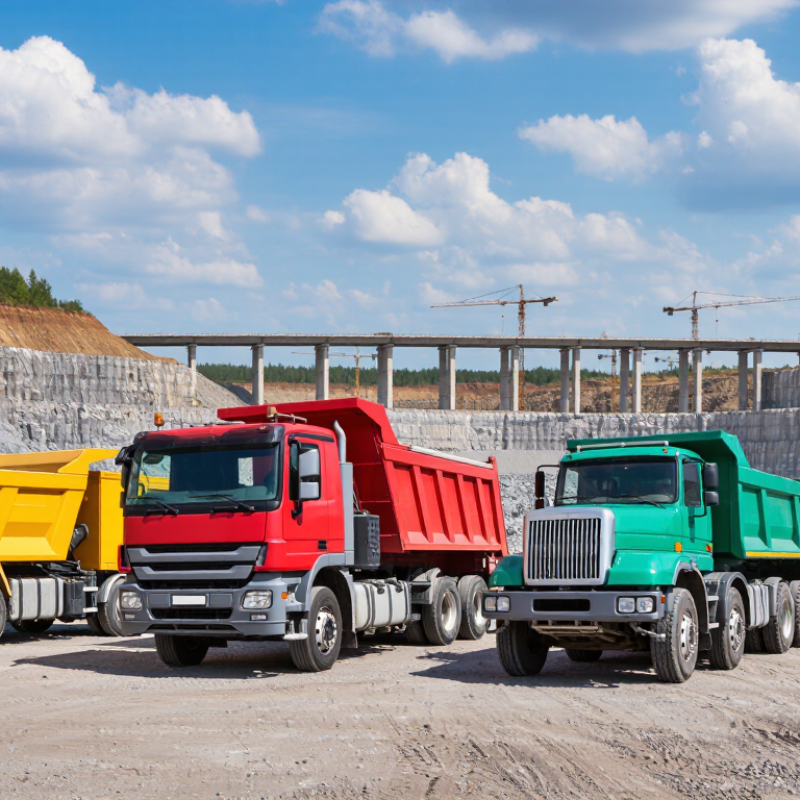
Top Types of Used Dump Trucks for Global Buyers?

Dump Truck Basics: Purpose, Structure, and Main Configurations

A dump truck carries loose materials such as soil, gravel, sand, and demolition debris. Its hydraulic system raises the cargo bed for quick unloading. The chassis must resist twisting under uneven loads. A strong frame matters.

The main structure includes a cab, engine, transmission, axles, suspension, hydraulic cylinder, and steel or aluminum bed. The power take-off drives the hydraulic pump. The tailgate controls how material leaves the bed.

On a used truck, inspect frame cracks, cylinder leaks, worn hinges, tire damage, and uneven bed movement. Service records are valuable, but they are not perfect proof.

Common configurations include 4x2, 6x4, and 8x4 rigid dump trucks.

A 4x2 suits lighter urban work and paved roads.
A 6x4 offers better traction on construction sites.
An 8x4 carries heavier loads but may cost more to operate.

Articulated dump trucks handle rough, soft ground with a hinged joint between cab and bed. They are less convenient on narrow public roads.

Global buyers should match payload, road conditions, local axle limits, and available repair skills. A clean exterior can hide serious wear. The cheapest truck may become the most expensive choice. I would also question unusually low mileage, especially without consistent maintenance records. No configuration is perfect.

Standard Used Dump Trucks for General Construction and Hauling

Standard used dump trucks remain practical for general construction, roadwork, quarry support, and short-distance hauling. Their simple layout helps operators move soil, gravel, sand, and demolition materials across demanding sites. A typical unit should offer a strong steel body, reliable hydraulic lifting, and enough payload for daily work. Bigger is not always better. Excessive capacity may increase fuel use and maintenance costs.

During inspections, check the frame for fresh welds, deep cracks, or uneven bends. Look beneath the body. Oil stains around hydraulic cylinders can signal expensive repairs. The hoist should rise smoothly and lower without sudden movement. Test the brakes, steering, lights, and parking system on a controlled surface. Tire wear also matters, especially on construction sites with sharp stone. A clean cab can hide rough treatment.

Service records add useful confidence, but they are not perfect proof. Compare recorded hours with pedal wear, seat condition, and steering-wheel damage. An experienced mechanic should inspect the engine, transmission, axles, and hydraulic pump before purchase. Ask for a cold start. Watch the exhaust and listen for unusual knocks. Small defects are manageable when priced honestly. Yet, I have seen buyers ignore weak brakes because the body looked impressive. That decision became costly. Confirm the truck’s payload, dimensions, and operating requirements against local site conditions before shipping or deployment.

Top Types of Used Dump Trucks for Global Buyers? - Standard Used Dump Trucks for General Construction and Hauling

Dump Truck Type Typical Rated Payload Drive Configuration Typical Body Capacity Dumping Direction Best-Fit Applications Key Used-Truck Inspection Points Global Buyer Suitability
Light-Duty Standard Dump Truck 2–6 tonnes 4×2; some 4×4 configurations 2.5–5 m³ Rear Residential construction, landscaping, road maintenance, municipal hauling Frame condition, hydraulic leaks, brake wear, tire condition, tailgate operation Suitable for urban access and lower operating costs
Medium-Duty Standard Dump Truck 6–12 tonnes 4×2 or 6×4 5–10 m³ Rear General construction, aggregate delivery, utility work, road base transport Suspension wear, PTO and hoist performance, chassis alignment, corrosion, service records Balanced option for mixed construction and hauling work
Heavy-Duty Standard Dump Truck 12–25 tonnes 6×4 or 8×4 10–20 m³ Rear Large earthworks, quarry access roads, infrastructure projects, bulk aggregate hauling Engine blow-by, transmission condition, differential noise, hydraulic cylinder wear, frame cracks Well suited to high-volume work on prepared roads and job sites
Three-Way Tipper Truck 3–15 tonnes 4×2 or 6×4 3–12 m³ Rear, left, and right Street projects, confined sites, utility trenches, material placement beside roads Side-hinge mechanisms, locking pins, hydraulic controls, body floor, uneven lifting Useful where unloading space is limited
Off-Road Construction Dump Truck 15–40 tonnes 4×4, 6×6, or articulated configuration 10–25 m³ Rear Uneven terrain, remote earthmoving, mining support, large site development Articulation joint, all-wheel-drive system, differential locks, underbody damage, tire matching Best for difficult terrain rather than normal public-road transport
Transfer Dump Truck 10–25 tonnes, depending on trailer setup 6×4 or 8×4 truck with detachable trailer 15–30 m³ combined capacity Rear from detachable body Long-distance aggregate hauling, demolition debris, recycling and waste transfer Trailer brakes, coupling system, hydraulic connections, body locks, axle and tire condition Provides higher capacity when regulations permit trailer use
Side-Dump Truck 15–35 tonnes 6×4, 8×4, or articulated configuration 12–25 m³ Left or right side Road embankments, trench backfilling, bulk material spreading, sites with limited rear clearance Side-tipping hinges, hydraulic stability, body floor, rollover protection, load-distribution system Effective for rapid unloading and controlled material placement
Roll-Off Construction Dump Truck 10–25 tonnes 6×4 or 8×4 15–35 m³ container Rear via hook-lift or cable system Demolition, soil removal, recycling, container-based site logistics Hook or cable mechanism, container locks, hydraulic hoses, frame rails, control valves Flexible for multiple containers and changing job-site needs
Payload and body-capacity figures are typical operating ranges. Actual limits vary by vehicle specification, body design, axle regulations, material density, road conditions, and local laws.

Articulated Dump Trucks for Rough Terrain and Heavy Loads

Articulated dump trucks suit rough terrain, steep haul roads, and heavy loads. Their pivoting frames keep more wheels on uneven ground. That matters on wet clay, broken rock, and temporary construction roads.

Oxford Economics’ Future of Construction 2023 projects global construction output will reach 15.5 trillion dollars by 2030. That growth may increase demand for productive used equipment. The 2024 Yellow Table recorded 243.4 billion dollars in construction-equipment sales among the leading manufacturers during 2023. However, neither report isolates used articulated dump trucks. Buyers should treat broad market figures carefully.

Common used ADTs carry about 25 to 45 metric tonnes. Payload is only one measure. Check frame articulation, differential locks, retarder performance, tire cuts, and hydraulic leaks. A cold start can reveal weak batteries or delayed oil pressure. Inspect the dump body floor for deep impact cracks. Then test the truck under load, not only on level ground. Maintenance records matter more than a clean repaint.

Hours can mislead.

A truck working on abrasive rock may suffer more wear than one moving soil. Ask for service intervals, payload history, and previous operating conditions. I would also question unusually low prices. They may reflect hidden transmission wear, poor tires, or unavailable parts. Used-equipment reports provide useful direction, but a qualified inspection remains essential before international purchase.

Top Types of Used Dump Trucks for Global Buyers

Articulated dump trucks are widely selected for rough terrain, steep access roads, and heavy off-road loads. Their flexible joint and all-wheel drive configuration support stable material transport on construction, mining, and infrastructure sites.

Typical rated payload classes are shown in metric tonnes. These capacity classes are commonly used across the global articulated dump truck market; actual specifications vary by configuration, body type, and operating conditions.

Rigid Haul Trucks for Mines, Quarries, and Large Sites

Top Types of Used Dump Trucks for Global Buyers?
Rigid Haul Trucks for Mines, Quarries, and Large Sites

Rigid haul trucks suit mines, quarries, and large construction sites with stable haul roads. Their fixed frames carry heavy payloads across repeated routes. Compared with articulated units, they usually offer stronger body support and higher travel stability on prepared surfaces. Used buyers should match payload, engine power, braking capacity, and body volume to the site’s actual gradients.

Demand remains practical, not speculative. The USGS Mineral Commodity Summaries 2024 estimated United States crushed stone output at about 1.9 billion metric tons. It also reported nearly 960 million metric tons of construction sand and gravel. These volumes explain why dependable haulage remains important for aggregate producers. A second-hand rigid truck can reduce capital pressure, but only when its operating history is verifiable.

Inspection should begin with frame welds, suspension points, differential noise, tire wear, and retarder performance. Request maintenance records, oil-analysis results, payload history, and documented working hours. An hour meter alone is weak evidence. Dust can hide cracks, while repeated overloading may distort the frame without obvious external damage. The International Council on Mining and Metals continues to emphasize equipment controls, maintenance, and operational discipline in mine safety guidance. That matters during export, where local parts support may be limited. I would not treat a low purchase price as value until transport, tires, emissions requirements, and future repairs are calculated.

How Global Buyers Should Compare and Inspect Used Dump Trucks

Used dump trucks vary by working environment. Rigid dump trucks suit mines, quarries, and large construction sites. Articulated dump trucks handle soft ground and uneven haul roads. Side dump trucks can unload quickly where space is limited. Global buyers should match the truck type with terrain, payload, road access, and local maintenance capacity. A cheaper unit may become expensive when parts or trained technicians are unavailable.

Inspection should begin before the engine starts. Check the chassis for fresh paint, cracks, bent rails, and uneven welds. Look beneath the frame for oil, coolant, or hydraulic leaks. Inspect the dump body floor, hinges, pins, and cylinder rods. Excessive wear around the hinge points often reveals heavy use. Confirm the rated payload, axle condition, tire size, and hour meter against the service records. Numbers can be wrong.

Start the engine cold, not after the seller has warmed it. Watch for hard starting, unusual smoke, unstable idle, and warning lights. During a road test, test braking, steering, transmission changes, and differential locks carefully. Raise and lower the body several times. Listen for pump noise and check whether it stops evenly. A clean cab can mislead an inspector. Oil analysis, an independent mechanic, and a verified chassis number provide stronger evidence. Photos are useful, but they cannot reveal every hidden fault. Be willing to reject a truck when records are incomplete or repairs appear rushed.

FAQS

What materials can a dump truck carry?

It carries loose materials like soil, gravel, sand, and demolition debris. Fast unloading matters.

How does a dump truck unload its cargo?

A power take-off drives the hydraulic pump. The hydraulic cylinder raises the bed, while the tailgate controls material flow.

Which parts should buyers inspect on a used dump truck?

Check frame cracks, cylinder leaks, worn hinges, damaged tires, and uneven bed movement. Look underneath, too.

Are maintenance records reliable proof of truck condition?

They provide useful clues, but they are not perfect proof. An hour meter alone says little. Oil-analysis results and working-hour records offer stronger evidence.

Which configuration suits lighter urban work?

A 4x2 usually fits lighter loads, paved roads, and city operations. It may struggle on soft construction ground.

When is a 6x4 dump truck a practical choice?

A 6x4 offers better traction on construction sites. Its extra driven axle helps on uneven or loose surfaces.

What are the advantages and limits of an 8x4 truck?

An 8x4 can carry heavier loads on suitable routes. However, tires, fuel, maintenance, and operating costs may increase.

When should buyers consider an articulated dump truck?

It suits rough, soft ground because its hinged joint improves terrain movement. Narrow public roads can make it inconvenient.

What should mine and quarry buyers examine first?

Inspect frame welds, suspension points, differential noise, tire wear, and retarder performance. Repeated overloading may bend the frame quietly.

How can global buyers avoid a poor purchase?

Match payload, road conditions, axle limits, repair skills, transport costs, and emissions requirements. A clean exterior can hide serious wear. The cheapest truck may cost more later.

Conclusion

This guide explains the main types of used dump trucks available to global buyers and how each configuration supports different work conditions. It first introduces dump truck basics, including their hauling purpose, key structural components, and common body and drivetrain layouts. Standard used dump trucks are suitable for general construction, roadwork, landscaping, and material transport, while articulated dump trucks offer improved maneuverability and stability on rough terrain with heavy loads. Rigid haul trucks are designed for demanding operations in mines, quarries, and large industrial sites where high payload capacity and continuous productivity are essential.

The article also outlines practical methods for comparing and inspecting used dump trucks. Buyers should evaluate payload, engine and transmission condition, frame integrity, suspension, tires, hydraulic systems, service history, operating hours, and maintenance records. Matching truck configuration to terrain, load type, working cycle, parts availability, and local service resources can help international purchasers reduce downtime, control ownership costs, and select reliable equipment for long-term use.

Isabella

Isabella

Isabella is a dedicated marketing professional with a sharp focus on driving brand growth and engagement through strategic content creation. With an extensive background in digital marketing, she combines her passion for storytelling with her keen understanding of industry trends to deliver......