TRUST VEHICLE
TRUST VEHICLE
TRUST VEHICLE
Explore our premium range of commercial transit systems, heavy duty tippers, and custom-modified haulage vehicles engineered to deliver outstanding operational performance.
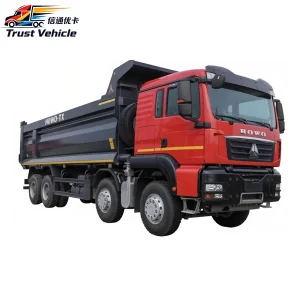
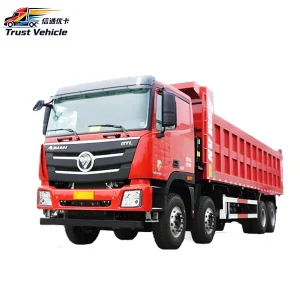
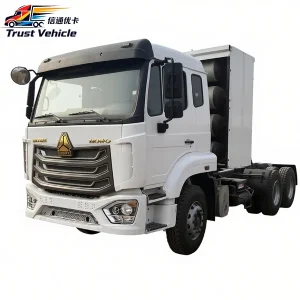
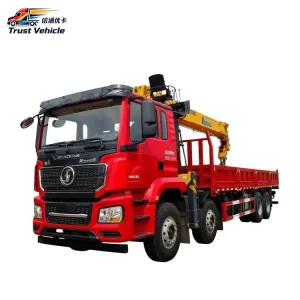
Understanding the tectonic shifts in heavy machinery operation, emission regulations, and the global demands of modern construction.
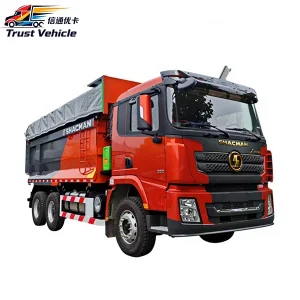
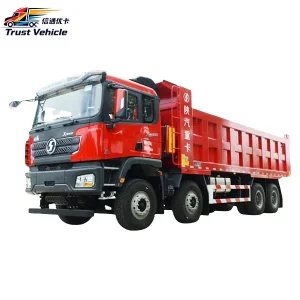
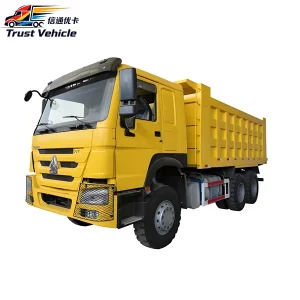
In modern industrial development, heavy-duty logistics and transport engineering represent the literal backbone of economic growth. Among the diversified transport mechanisms available today, the 6x4 dump truck stands out as a critical vehicle configuration, offering the ultimate balance of payload capability, off-road traction, and structural cost-efficiency. Designed with a double-drive rear axle system (six wheel positions with four driven wheels), the 6x4 powertrain provides excellent gradeability and ground adhesion over loose surfaces—making it indispensable for mining sites, municipal works, and large-scale infrastructure developments.
As global supply chains demand shorter project lifecycles, heavy transport procurement has shifted from purchasing off-the-shelf standard models to sourcing Custom OEM 6x4 dump truck solutions. Industrial buyers no longer seek generic products; they seek custom configurations optimized for specific geoclimatic conditions, payload densities, and strict regulatory frameworks.
Strict emission standards are driving heavy vehicle manufacturers to transition from standard diesel engines to Compressed Natural Gas (CNG), Liquefied Natural Gas (LNG), and hybrid drivetrains, drastically lowering the operating cost per ton-kilometer in environmentally sensitive areas.
Modern fleet procurement emphasizes the reduction of unladen vehicle weight. By designing dump beds with high-grade wear-resistant alloy steels (such as NM450 and Hardox equivalent materials), operators can maximize payload volume without exceeding safety parameters.
IoT modules and smart sensors track mechanical stress, oil viscosity, hydraulic pressure, and axle load distribution in real-time. Fleet managers can prevent component failures, optimize maintenance schedules, and monitor driver behavior dynamically.
A technical guide to payload optimization, powertrain calibration, and structural customization offered by industry-leading factories.
From an engineering perspective, the optimization of a 6x4 dump truck requires fine-tuning the torque path from the engine, through the transmission, and finally to the dual-drive rear axles. OEM factories focus on matching engine displacement with heavy gearboxes and high-reduction hub axles. This configuration delivers torque multiplication factors necessary to pull gross weights of over 40 tons out of steep pit configurations.
When engineering and purchasing a heavy duty transport fleet, procurement managers must map the operating requirements directly to the chassis specification sheets. Key parameters include:
| System Component | Standard Specification Range | OEM Customization Options |
|---|---|---|
| Power Output (HP) | 290 HP - 480 HP (Weichai, Cummins, Sinotruk, Foton motors) | High-altitude fuel-injection map calibration, custom ECU programming. |
| Transmission | Manual (9/10/12-Speed with synchronizers) or AMT options | Retarder integration, customized torque converters for high-load cycles. |
| Drive Axle System | Double reduction, hub reduction, ratio 4.8 to 5.73 | Inter-wheel and inter-axle differential locks, reinforced housing. |
| Suspension Setup | Multi-leaf spring (9/12 layers) or heavy bogie suspensions | Dual-layer reinforced U-bolts, custom spring stiffness indexes. |
| Dump Bed Capacity | 15 m³ - 25 m³ structural volume | U-shape anti-stick designs, high-strength wear plates (NM450). |
| Hydraulic Tipping | Front lifting telescopic cylinder (HYVA or factory equivalents) | Underbody middle lifting twin-cylinder, custom fast-drop valves. |
OEM factories leverage advanced hydraulic calculation software to ensure that the tipping speed, cylinder angle, and structural chassis frame flex stay within safe operating tolerances. This is particularly crucial during offset dumping where the cargo center of gravity moves out of alignment with the truck centerline.
How China's premier commercial vehicle manufacturing clusters reduce production lead times while elevating structural quality.
The manufacturing ecosystem in northern China—specifically the Beijing-Tianjin-Hebei industrial belt—provides an unmatched strategic cluster for heavy-duty commercial vehicle production. With thousands of raw material providers, precision stamping shops, forging plants, and robotic welding lines operating in synergy, this region produces robust machinery with short design-to-delivery cycles.
Industry 4.0 principles, including high-precision laser cutters, robotic arm chassis assembly systems, and computerized quality gates, ensure that every custom 6x4 dump truck is constructed with zero structural defects. Because components such as gearboxes, steering linkages, cabins, and hydraulic pumps are developed in dense regional ecosystems, the cost base of custom modification drops significantly compared to Western manufacturers. This advantage directly benefits global industrial procurement teams by offering highly competitive initial procurement costs and low-cost replacement parts.
Adapting 6x4 chassis properties to target environments, operational stresses, and specific fleet deployment requirements.
For operations in regions like the South American Andes or Central Asian mining complexes, 6x4 tippers require turbochargers with wastegate compensators, multi-stage filtration systems to manage airborne particulates, and reinforced retarders to protect standard mechanical service brakes during steep loaded descents.
For municipal operations in developed centers, 6x4 trucks require Euro V/VI emissions adherence, localized noise-reduction exhaust systems, automatic tire spray suppression, and advanced blind-spot warning sensors to ensure safety on busy metropolitan transport networks.
Desert oil field infrastructure and arctic hauling both present severe thermal challenges. OEM builds incorporate either secondary hydraulic cooling loops (for GCC environments reaching 55°C) or diesel fuel pre-heaters and insulated oil lines (for sub-zero Siberian or Canadian transport tracks).
Bridging Chinese manufacturing clusters with international procurement requirements since 2025.
Shijiazhuang Trust Vehicle Industry Co.,Ltd was established in 2025 and is headquartered in Shijiazhuang, Hebei Province. It is a comprehensive enterprise focusing on the export of used commercial vehicles, used cars, and used engineering vehicles. Relying on the advantages of the largest commercial vehicle industry cluster in northern China, the company integrates high-quality vehicle sources in the Beijing-Tianjin-Hebei region and is committed to providing global customers with cost-effective vehicle procurement, maintenance and modification, export logistics, and after-sales support one-stop services.
The enterprise acts as a vital bridge between specialized industrial demand and raw manufacturing capacity. Because the company sits in the heart of northern China’s vehicle cluster, it can easily handle bespoke modification projects. Whether converting standard diesel 6x4 prime movers into specialized tippers, executing strict 100-point inspections on quality pre-owned fleets (such as Shacman, HOWO, Foton, and Volvo platforms), or coordinating complex multi-destination roll-on/roll-off (RoRo) shipping logistics, the team guarantees transparent and compliant export processes.
By leveraging its regional network, Shijiazhuang Trust Vehicle Industry Co.,Ltd ensures that international buyers acquire machines that meet local road-worthiness regulations, operational emission brackets, and severe duty requirements. The integration of high-performance components, coupled with expert quality control, provides a reliable alternative to buying brand-new equipment at higher capital expenditures.
Professional answers to common engineering, procurement, and shipping questions when sourcing custom heavy-duty trucks.
The 6x4 configuration features a shorter wheelbase and dual rear drive axles, offering better maneuverability, lower fuel consumption, and a tighter turning radius than an 8x4 model. While an 8x4 truck carries a higher maximum payload due to its extra steering axle, a 6x4 is more cost-effective for off-road terrains, steep mining routes, and urban infrastructure sites where space is restricted.
At high altitudes, thin air reduces engine output. We optimize customized diesel fuel maps, specify engines with advanced variable geometry turbochargers (VGT), and integrate secondary cooling systems. We also customize gear ratios to provide higher starting torque in low gears, preventing engine lugging and maintaining gradeability in mountainous regions.
For mining or hauling heavy basalt and granite, we customize the dump beds with high-tensile, wear-resistant steel plates like NM450 or NM500 (hardness equivalents of Hardox 450/500). Standard construction dirt beds usually feature Q345B steel. Using higher-grade alloys allows us to reduce bed plate thickness, lowering the unladen weight of the truck and increasing legal payload capacity.
Weichai and Cummins engines dominate the heavy commercial vehicle market due to their durable construction, low-end torque profiles, and extensive global parts networks. They offer wide RPM bands for maximum torque output and integrate smoothly with standard Fast transmissions, making field repairs simple for fleet mechanics in remote regions.
The main parameters include the maximum working pressure (typically 19-22 MPa), the diameter and stroke of the multi-stage telescopic cylinder, and the tipping angle (between 46° and 52°). Front-mount cylinders (like HYVA) are preferred for longer beds to prevent tipping-point chassis twist, while under-body twin-cylinders work best for shorter, heavy-payload dump beds.
Yes. By working with Shijiazhuang Trust Vehicle Industry Co.,Ltd, we can check, refit, and modify used commercial fleets. Modifications include mounting exhaust after-treatment systems (DPF, SCR with AdBlue dosing systems) to meet Euro IV or Euro V requirements, depending on target port regulations.
We run a thorough 100-point inspection covering engine cylinder compression, gearbox sync wear, chassis frame alignment, drive axle differential clearance, hydraulic hoist cylinders, and braking systems. Any worn components are replaced with original manufacturer parts before shipping.
Heavy vehicles are typically shipped using Roll-on/Roll-off (RoRo) vessels, which protect them from sea spray damage. Alternatively, we utilize Bulk Cargo carriers (lifted via crane with protective anti-rust wax coatings applied to the bodywork) or flat-rack containers for semi-disassembled chassis to lower transport costs on specific shipping lines.
Discover our range of logistics support vehicles, specialized cargo carriers, and compact transport models designed to cover all operational tasks.