TRUST VEHICLE
TRUST VEHICLE
TRUST VEHICLE
Established in 2025 and headquartered in Shijiazhuang, Hebei Province, Shijiazhuang Trust Vehicle Industry Co.,Ltd is a comprehensive enterprise specializing in the export of used commercial vehicles, passenger cars, and heavy-duty engineering machinery. Leveraging the resources of northern China's largest commercial vehicle industrial cluster, the company integrates high-quality supply networks from the Beijing-Tianjin-Hebei region. We deliver custom vehicle sourcing, engineering overhaul, tailored retrofitments, secure export logistics, and global post-sale engineering support to ensure operational readiness worldwide.
Precision-engineered transport and heavy utility systems sourced directly from leading industrial supply chains.
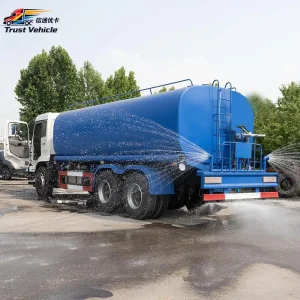
In global distribution systems, liquid, gaseous, and hazardous logistics depend on specialized tank vehicles. Sourcing a custom OEM tanker truck involves managing complex configurations where tank chemistry, chassis layout, and safety components dictate the final acquisition cost. Understanding these elements helps logistics managers and industrial operators control capital expenditures (CapEx) while meeting strict international safety compliance.
A custom tanker truck's price is not a static catalog entry. Instead, it is a variable calculation shaped by three core engineering decisions:
| Tanker Sub-System Type | Standard Configuration Materials | Estimated Cost Weighting (%) | Primary Application Areas |
|---|---|---|---|
| Hydrocarbon/Petroleum | Aluminium Alloy 5083 / Carbon Steel Q235 | 40% Chassis / 35% Tank / 25% Valves | Gasoline, Diesel, Jet A-1 Distribution |
| Corrosive Chemical | Stainless Steel 316L / FRP Lined Steel | 30% Chassis / 50% Tank / 20% Safety systems | Acids, Alkalis, Heavy Industrial Chemicals |
| Food-Grade Sanitary | Stainless Steel 304 (Highly Polished) | 35% Chassis / 45% Tank / 20% Wash Systems | Milk, Potable Water, Liquid Sugars, Edible Oils |
| LPG / Cryogenic Gas | High-Tensile Q345R Pressure Vessel Steel | 25% Chassis / 55% Tank / 20% Cryo-Valves | Propane, Butane, LNG, Liquid Nitrogen |
Technical Insight: Selecting high-tensile aluminum alloy instead of traditional carbon steel reduces the empty vehicle weight by up to 30%. This weight reduction allows operators to carry more payload per trip, helping offset the higher initial price of an aluminum tank within the first 14 months of operation.
Reliable tanker manufacturing requires strict adherence to international fabrication codes. Our partners utilize automated plasma arc welding and double-sided submerged arc welding (SAW) to eliminate microscopic defects in structural seams. All tank bodies undergo non-destructive testing (NDT), including X-ray weld inspections and hydrostatic pressure tests, to ensure leakproof performance under high pressure.
A key aspect of liquid bulk transportation safety is the design of internal baffles. Our engineering layouts feature dished or corrugated surge baffles spaced according to ADR and DOT guidelines. These design details mitigate the sloshing of liquid cargo during braking and cornering, preserving steering control and preventing structural fatigue on the chassis mounting brackets.
Environmental and operational requirements vary by region, demanding localized design choices:
Working with an export partner based in Shijiazhuang, Hebei Province, gives buyers access to northern China's heavy industrial manufacturing clusters. The Beijing-Tianjin-Hebei region integrates raw steel processing, axle fabrication, chassis assembly, and specialized logistics terminals into a single supply chain corridor.
This geographic concentration reduces raw material shipping costs and simplifies manufacturing oversight. Local partners can quickly source specialized steel and components, handle custom vehicle retrofits, perform pre-export inspections, and arrange shipping through nearby Tianjin Port. These integrated logistics help lower final procurement costs compared to fragmented global supply chains.
The tank truck manufacturing industry is adopting new technologies to improve efficiency, safety, and environmental performance:
Smart sensors provide fleet operators with real-time data on cargo temperature, pressure, discharge valve status, and remaining volume. This digital tracking improves security and product quality control throughout the distribution cycle.
As carbon emissions regulations tighten, manufacturers are developing tanker chassis compatible with Compressed Natural Gas (CNG), Liquefied Natural Gas (LNG), and battery-electric drivetrains for urban bulk distribution.
New fluoropolymer linings and high-durability polymer coatings allow a single stainless steel or carbon steel tank to safely haul a wider variety of corrosive chemicals and high-purity liquids without cross-contamination.
Purchasing customized transport equipment internationally requires careful attention to regulatory standards. Sourcing partners help buyers verify that vehicles meet local highway requirements, including axle load limits, overall vehicle dimensions, braking standards, and tailpipe emissions (such as Euro 5 or Euro 6 configurations).
For chemical and hazardous materials transport, vehicles must meet specific pressure vessel certifications, such as ASME Section VIII, ADR, or local equivalents. Working with experienced exporters helps ensure that all technical drawings, welding certificates, and pressure testing documents are verified before the vehicle ships, preventing delays during customs clearance and local registration.
Expert answers to common questions about customization options, pricing factors, and international shipping protocols.
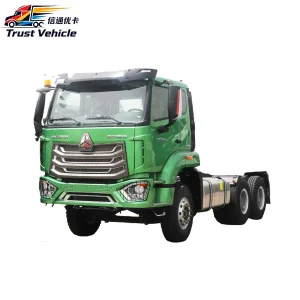
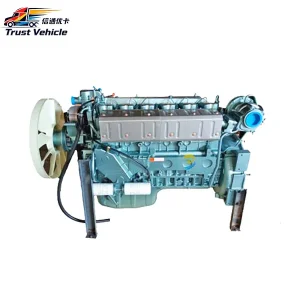
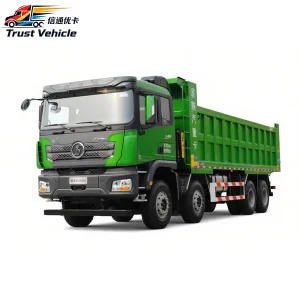
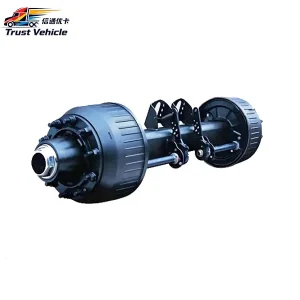
Explore our full range of heavy-duty tractors, tipper trucks, specialized axles, and replacement engines.