TRUST VEHICLE
TRUST VEHICLE
TRUST VEHICLE
Explore our hot-sale commercial vehicles, industrial forklifts, and core heavy-duty components ready for export.
Connecting global industries with premium commercial fleet solutions from the industrial heartland of Northern China.
Shijiazhuang Trust Vehicle Industry Co.,Ltd was established in 2025 and is headquartered in Shijiazhuang, Hebei Province. It is a comprehensive enterprise focusing on the export of used commercial vehicles, used cars, and used engineering vehicles. Relying on the advantages of the largest commercial vehicle industry cluster in northern China, the company integrates high-quality vehicle sources in the Beijing-Tianjin-Hebei region and is committed to providing global customers with cost-effective vehicle procurement, maintenance and modification, export logistics and after-sales support one-stop services.
Our mandate is clear: Optimize international transport assets, verify every mechanical component under strict engineering protocols, and ensure absolute regulatory compliance for cross-border liquid and cargo logistics.
Analyzing market dynamics, fleet distribution patterns, and bulk liquid transport demand across key international trade corridors.
The global commercial transport market is witnessing a rapid expansion in bulk liquid logistics. High-volume liquid assets—ranging from refined petroleum products and chemical reagents to food-grade oils and potable water—require highly specialized containment systems. In developing economies, particularly across Africa, Central Asia, and Latin America, tanker trucks serve as mobile pipelines. They bypass infrastructure gaps to deliver essential resources directly to urban hubs, mining operations, and agricultural projects.
As cross-border safety standards become more stringent (such as the ADR framework in Europe and similar DOT codes globally), exporters must supply vehicles that do not just meet basic mobility needs but also satisfy demanding structural integrity checks. This structural requirement has shifted the emphasis from cheap used tankers to highly engineered, verified, and re-certified container vessels capable of surviving rugged operating terrains while mitigating risk of environmental contamination.
Analyzing mechanical requirements by region. For instance, Middle Eastern operators demand extreme heat insulation, while South American routes require high-altitude brake safety upgrades.
Customizing used commercial vehicles to precise localized specs, including heavy-duty chassis reinforcements and advanced multi-compartment fuel containment layouts.
Strict engineering reviews to prevent hydro-sloshing stresses and structural cracking under heavy dynamic loads on off-road industrial sites.
A technical guide to selecting the correct alloys, thickness, and compartment structures based on specific gravity and fluid chemistry.
The tank shell is the critical core of any liquid cargo truck. Selecting the right metal alloy is the first step in ensuring durability and chemical compatibility. Standard options include high-tensile carbon steel (like Q235B or Q345R), stainless steel (304 or 316L for corrosive acids/alkalis), and lightweight aluminum alloys (5083 or 5454 for fuels). The choice of material impacts tare weight, payload efficiency, chemical resistance, and total operational lifespan.
| Material Designation | Common Applications | Tensile Strength (MPa) | Corrosion Resistance | Tare Weight Index | Relative Cost Factor |
|---|---|---|---|---|---|
| Carbon Steel (Q345R) | Crude oil, diesel, industrial wastewater, dry bulk cement | 470 - 630 | Moderate (Requires coating) | High (Heavy shell) | Baseline (Cost-Effective) |
| Stainless Steel (SS316L) | Concentrated chemicals, acids, liquid food, drinking water | 485 min | Excellent (Acid & alkali resistant) | High (Heavy shell) | High Investment |
| Aluminum Alloy (5083-H111) | Premium gasoline, aviation fuel, light oil products | 275 - 350 | High (Naturally rust-proof) | Low (Up to 30% savings) | Premium |
Liquid cargo shifts dynamically during acceleration and braking. Our tanker units feature curved, dish-shaped baffles spaced along the container axis. These reduce dynamic shock loads by up to 60%, stabilizing the tractor-trailer assembly at high speeds.
To allow mixed loads (e.g., gasoline and diesel on the same trip), tanks are split into separate compartments, each with its own discharge valve, vapor line, and overfill prevention sensor. This increases operational flexibility for distributors.
Modern fuel systems prioritize safety by loading from the bottom. This prevents static buildup, minimizes vapor emissions, and protects operators by keeping them off the top walk-way during high-pressure fluid transfers.
Customizing tractor-trailer configurations to perform reliably in demanding operating environments worldwide.
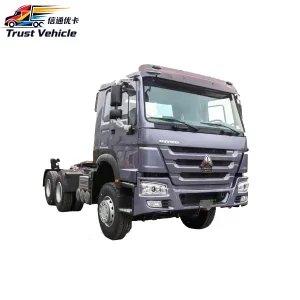
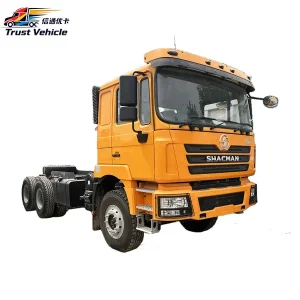
Rough unpaved roads demand heavy-duty leaf spring suspensions (such as the standard 10-leaf mechanical configuration) rather than air suspension. Dual-drive 6x4 tractor setups from manufacturers like Sinotruk and Shacman are preferred for extra traction, while large oil-bath air pre-filters protect engines from fine sand and dust.
High ambient temperatures require upgraded cab cooling systems, special tire compounds resistant to heat degradation, and dual-shell insulation for volatile liquids. Vapor recovery lines (Stage I & II) are essential to prevent evaporation and preserve fuel value in hot conditions.
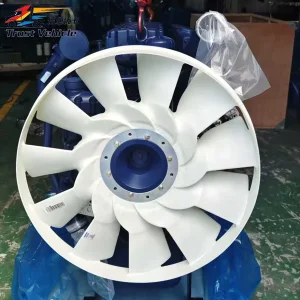
Navigating high altitudes in the Andes requires robust engine performance. Turbocharged, high-displacement engines (like the Weichai 430HP Series) paired with auxiliary engine retarders (e.g., Jacobs brakes) and electronic braking systems (EBS) are critical for safety on long descents.
Technical Note: Shijiazhuang Trust Vehicle Industry Co.,Ltd collaborates with engineering teams to modify used truck frames, add leaf springs, optimize gear ratios, and test pneumatic piping to ensure peak performance under these harsh conditions.
The transition toward telemetry-driven fleet management, lighter construction, and cleaner powertrains.
Real-time monitoring of fluid levels, temperature changes, and hatch security sensors, helping operators prevent product theft and tracking cargo temperature changes in transit.
Heavy tanker fleets are transitioning to LNG and hydrogen fuel-cell tractors. These offer the torque needed for heavy liquid hauls while reducing fleet greenhouse gas emissions.
Integrating radar-based collision warning systems, electronic stability programs (ESP) designed for high center-of-gravity liquids, and automatic emergency braking.
Providing end-to-end support, from vehicle refurbishment to international customs clearance and shipping.
Procuring heavy-duty commercial tankers across international borders involves complex logistics, regulatory checks, and transport challenges. Shijiazhuang Trust Vehicle Industry Co.,Ltd simplifies this process with a structured, step-by-step export workflow designed for international buyers.
Get answers to common technical, logistics, and compliance questions about purchasing and importing used tanker trucks.
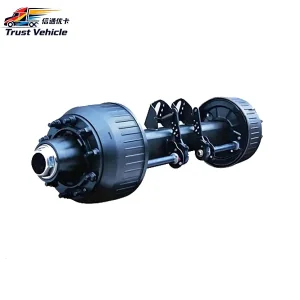
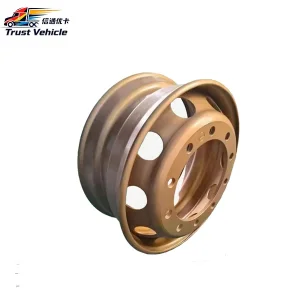
Essential spare parts, semi-trailer axles, durable wheel rims, and additional vehicle models for commercial fleet upgrades.