TRUST VEHICLE
TRUST VEHICLE
TRUST VEHICLE
The United Kingdom's road haulage sector is a vital component of the nation's economic infrastructure. Over 75% of all domestic freight movements across England, Scotland, Wales, and Northern Ireland rely on heavy commercial vehicles (HCVs). Because these vehicles navigate diverse topographies—ranging from the high-frequency stop-and-go patterns of metropolitan London to the steep gradients of the Pennines and Scottish Highlands—the integrity of their pneumatic braking systems is paramount.
Within this context, the air brake chamber serves as the critical energy transducer, converting compressed air into the linear mechanical force required to actuate foundation brakes (S-cam drum brakes or disc brakes). The UK market enforces stringent regulatory standards under the Driver and Vehicle Standards Agency (DVSA) and the Vehicle Certification Agency (VCA). Any compromise in brake stroke efficiency, diaphragm resilience, or return spring tension directly impacts annual vehicle inspection (MOT) pass rates and overall fleet safety profiles.
Selecting the appropriate air brake chamber configuration requires a deep understanding of its engineering mechanics. Actuators are primarily categorized into Service Brake Chambers (single diaphragm) and Spring Brake Chambers (double diaphragm combination units).
1. Stroke Length (Standard vs. Long Stroke): Standard Type 30 chambers feature a maximum stroke capability of 2.5 inches (63.5 mm). Long-stroke variants (Type 30LS) extend this capability to 3.0 inches (76.2 mm), providing a wider safety margin against mechanical brake fade caused by thermal expansion of the brake drum.
2. High-Stress Return Springs: The internal spring is responsible for returning the pushrod to its resting position. High-strength silicon-chrome alloy steel is utilized to prevent premature fatigue failures, maintaining consistent return rates even after millions of cycles.
3. Diaphragm Formulation: Standard rubber compounds fail in sub-zero environments. Premium suppliers utilize proprietary Ethylene Propylene Diene Monomer (EPDM) or chlorinated rubber matrices that remain flexible down to -40°C while resisting oil, fuel, and ozone degradation.
4. Dual-Diaphragm Parking Brakes (Type 24/30 & 30/30): Combining a service chamber with a spring-powered parking chamber ensures emergency mechanical brake engagement should pneumatic system pressure drop below the safety threshold (typically 4.5 bar).
Furthermore, the shift from traditional drum brakes to Air Disc Brakes (ADB) in modern European and UK tractor units has led to the development of specialized piston-type and compact diaphragm actuators. These systems require higher positioning precision and lower internal friction parameters to maintain precise pad-to-rotor clearance.
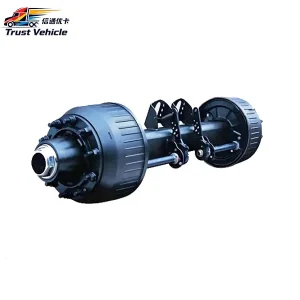
For UK fleet buyers, distributors, and OE service providers, navigating the balance between purchase cost and operational downtime is a daily challenge. Sourcing air brake chambers and related suspension components directly from top-tier Chinese manufacturing clusters provides a major strategic advantage.
Modern Chinese automotive factories operate under strict IATF 16949:2016 quality management frameworks. By leveraging high-tonnage progressive die stamping presses and robotic assembly cells, these plants achieve structural tolerances that minimize dynamic variation in the brake pushrod. This structural consistency translates directly to balanced braking force distribution, preventing uneven shoe wear and trailer jackknifing.
Through automated leak detection chambers operating on pneumatic differential pressure decay methods, premium Chinese suppliers ensure that 100% of outbound stock meets Zero-Leakage parameters. When combined with bulk shipping logistics from high-capacity ports, UK distributors gain access to high-performance, cost-effective replacement components.
London & regional urban transit bus fleets generate rapid thermal cycles. High-temp EPDM diaphragms prevent premature hardening and splitting under constant system pressure venting.
Trailers operating near deepwater ports like Felixstowe and Southampton require specialized non-pressure plate drainage ports to prevent salt-fog entrapment inside the spring housing.
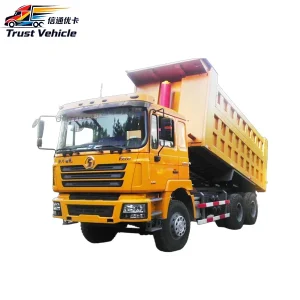
Heavy aggregate dump trucks operating in Welsh quarries depend on high-force power springs to hold maximum legal payloads on steep, loose-surface gradients.
Elevated highways like the M62 experience strong crosswinds and prolonged hill descents, demanding actuators with linear mechanical response times and minimal heat transfer.
When procurement directors evaluate prospective manufacturing facilities in China, validating the engineering standards of air brake chambers requires a comprehensive technical audit. The following checklist ensures that replacement parts deliver long-term reliability and comply with international standards:
A failed brake actuator diaphragm compromises the pressure balance of the entire pneumatic circuit. Even if the safety check valves activate, pressure drops can trigger spring brake application at speed—creating dangerous driving scenarios. Implementing structured technical audits helps protect fleet operations from preventable mechanical issues.
Consult with our Quality EngineersThe automotive safety landscape is moving toward smarter, more integrated chassis management systems. Modern air brake design is increasingly influenced by three major industry developments:
Integrating hall-effect displacement sensors directly into the non-pressure cover provides real-time data to tell drivers if a pushrod is approaching travel limits.
Advanced manufacturing facilities are replacing heavy stamped-steel components with high-pressure die-cast aluminum alloys to help optimize commercial chassis weight.
Optimised internal sealing configurations reduce the pneumatic pressure threshold required to initiate piston movement, helping improve overall system response times.
These advancements help support integration with Electronic Braking Systems (EBS) and Autonomous Emergency Braking (AEB) systems. They ensure the physical actuators can match the rapid cycle demands of electronic safety systems.
Established in 2025 and headquartered in Shijiazhuang, Hebei Province, Shijiazhuang Trust Vehicle Industry Co.,Ltd is a comprehensive enterprise focusing on the export of used commercial vehicles, used cars, and used engineering vehicles.
Relying on the advantages of the largest commercial vehicle industry cluster in northern China, the company integrates high-quality vehicle sources in the Beijing-Tianjin-Hebei region. It is committed to providing global customers with cost-effective vehicle procurement, maintenance and modification, export logistics, and after-sales support one-stop services.
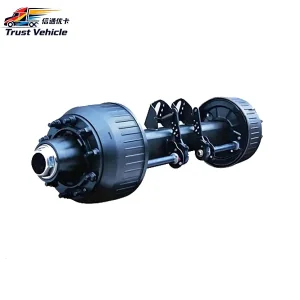
Our strategic position within China's steel fabrication and automotive supply hubs enables us to source and supply heavy-duty transport modules, axles, engines, and critical pneumatic brake components. This ensures our clients receive quality-tested equipment built to withstand demanding industrial applications.
All components are performance-checked for pressure retention and mechanical function before dispatch.
We align brake system specifications with axle assemblies and vehicle configurations to simplify fleet compatibility.
We coordinate customs clearance, sea freight logistics, and delivery details to streamline procurement for import operations.