TRUST VEHICLE
TRUST VEHICLE
TRUST VEHICLE
Engineered to deliver exceptional tractive effort, cargo security, and operational reliability in tough heavy-duty applications.
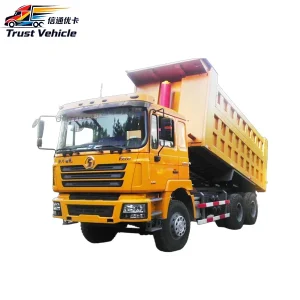
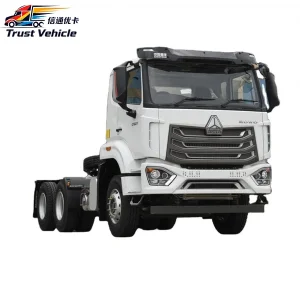
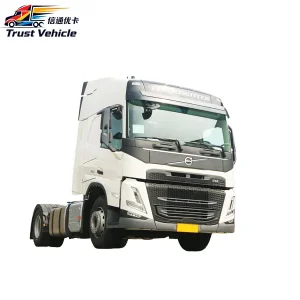
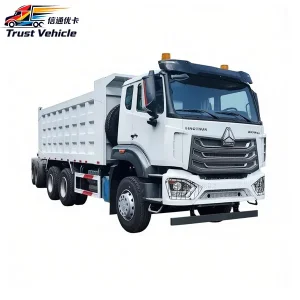
Why the 6x4 wheel configuration remains the global standard for infrastructure and heavy mining haulage.
In global heavy industries, logistics, infrastructure, and mining, transportation efficiency directly dictates project profitability. The 6x4 dump truck configuration—consisting of a three-axle chassis with one steer axle and two driven axles (ten wheels total)—strikes an optimal balance between chassis load distribution, traction control, operating economics, and mechanical reliability.
While 4x2 configurations are constrained by payload limits, and 8x4 chassis face manoeuvrability bottlenecks and higher maintenance complexities in tight locations, the 6x4 tipper platform remains the most requested workhorse globally. This chassis configuration excels under high shear environments, steep gradients, and shifting terrains, transferring peak engine torque to the ground via tandem rear drive axles.
| Chassis Configuration | Target Payload Range | Gradeability Rating | Best Application Scenarios | Maintenance Complexity |
|---|---|---|---|---|
| 4x2 Light-Medium Duty | 5 - 12 Metric Tons | 15% - 20% Gradient | Urban construction, municipal waste, retail sand/gravel | Low |
| 6x4 Heavy-Duty Tipper | 15 - 30 Metric Tons | 30% - 40% Gradient | Deep open-cast mining, regional roads, massive earthworks | Moderate (Optimal Balance) |
| 8x4 Extra Heavy-Duty | 30 - 45 Metric Tons | 25% - 35% Gradient | Heavy rock quarrying, mega-scale concrete works | High |
Uncompromising power delivery. Understanding the mechanics that drive high-load performance.
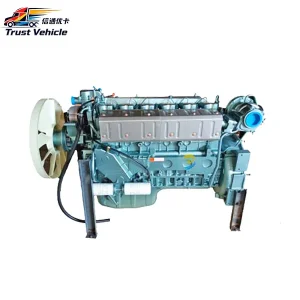
Equipped with engines like the 12.8L heavy-duty diesel series, these platforms deliver sustained torque from as low as 1,000 RPM. This wide torque band reduces shift frequencies, optimizes fuel economy, and reduces powertrain wear.
Featuring heavy-duty multi-leaf semi-elliptic springs combined with double-acting hydraulic shock absorbers and stabilizer bars. The rear tandem axle utilizes a heavy-duty bogie suspension system designed to handle severe impact loads.
Engineered with multi-stage front-tipping hydraulic cylinders that feature high-pressure sealing technology. The lifting geometry minimizes roll risk and tipping cycle duration, improving overall job site cycles.
The core structural integrity relies on the high-tensile steel frame (typically utilizing double-layer frames with dimensions like 300x80x8+8mm). Torsional rigidity is key; when the cargo body dumps on uneven ground, any chassis twisting can lead to lateral instability. The integration of domestic high-strength wear-resistant plates (NM450 or NM500, comparable to Hardox performance profiles) in the tipper box design limits structural deformation and abrasion from heavy aggregate rock loading.
How 6x4 tipper models are configured for specific geographical, climatic, and industrial sectors.
Operational Demands: Unpaved corrugated roads, high ambient dust loading, and remote service hubs.
Technical Solution: Oil-bath double air-filtration systems to capture micro-dust particles, increased ground clearance axles, and robust mechanical fuel injection platforms (or heavy-duty water-separating filters) to handle fuel quality variations.
Operational Demands: Highly dynamic clay soils, slippery access roads, and frequent monsoons.
Technical Solution: Standard dual-wheel differential locks (inter-wheel and inter-axle locks) configured with aggressive mud-terrain traction tires and corrosion-resistant undercoating protection for high-humidity coastal work sites.
Operational Demands: Ambient temperatures exceeding 50°C and heavy operations in fine sand dunes.
Technical Solution: Oversized heat dissipation radiators, high-performance cabin HVAC setups, silicone-enhanced coolant hoses, and specialized dust protection boots over critical suspension joints.
Capitalizing on industrial clustering, robust component integration, and port logistics.
The dominant position of Chinese manufacturers in the global heavy vehicle segment is backed by mature industrial clusters. The Beijing-Tianjin-Hebei commercial vehicle cluster in Northern China integrates raw metallurgy processing, hydraulic cylinder precision manufacturing, axle castings, and diesel engine production lines into a coordinated ecosystem.
This structural proximity reduces transit times and lead times for heavy vehicle configurations, providing a massive advantage over European and North American manufacturing lines. Furthermore, sourcing second-hand and reconditioned assets from these regions guarantees a reliable stream of high-quality OEM replacement parts, ensuring that downstream fleet operators do not experience long downtimes waiting for key components.
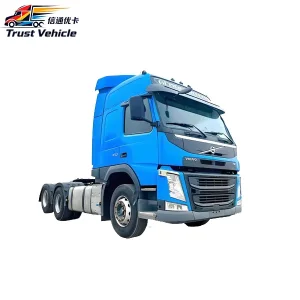
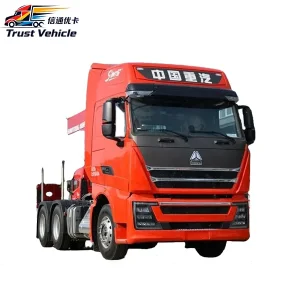
When sourcing used commercial assets (such as HOWO, Shacman, or Volvo heavy trucks), a structural remanufacturing protocol is utilized. Each chassis goes through a rigorous inspection sequence: frame alignment inspection, engine cylinder pressure testing, transmission gear backlash optimization, and full-scale hydraulic system pressure monitoring.
Bridging Chinese manufacturing clusters with international construction and mining operations.
Shijiazhuang Trust Vehicle Industry Co.,Ltd was established in 2025 and is headquartered in Shijiazhuang, Hebei Province. It is a comprehensive enterprise focusing on the export of used commercial vehicles, used cars, and used engineering vehicles. Relying on the advantages of the largest commercial vehicle industry cluster in northern China, the company integrates high-quality vehicle sources in the Beijing-Tianjin-Hebei region and is committed to providing global customers with cost-effective vehicle procurement, maintenance and modification, export logistics, and after-sales support one-stop services.
Through our strict supply-chain quality protocols, we select vehicles from prime state-backed operations, municipal transport companies, and premier private mining companies. This ensures that every unit dispatched meets the rigorous mechanical standards demanded by overseas heavy engineering projects.
The strategic shift towards lower emissions, intelligent telematics, and electrification in haulage.
Technical answers to support heavy procurement and fleet optimization decisions.
Support equipment, high-performance replacement engines, and utility transport platforms.