 TRUST VEHICLE
TRUST VEHICLE
TRUST VEHICLE
Explore our premium tractor trucks and coupling components selected for high mechanical stress in Kazakhstan's transport corridors
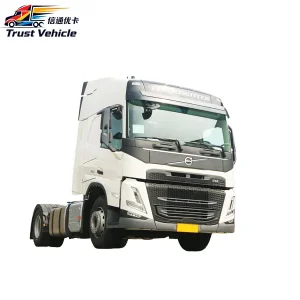
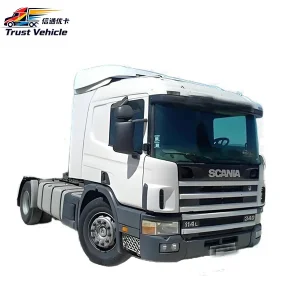
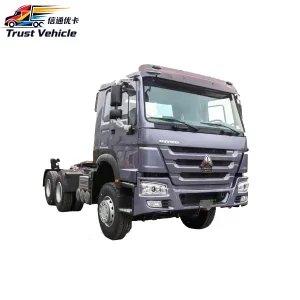
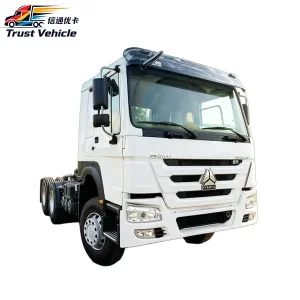
Kazakhstan stands at the geographic heart of Eurasia's modern land bridge. As a critical land-based logistics transit node linking Western China with Eastern Europe and Central Asian trade routes (including the Middle Corridor), the region's transport sector handles millions of tons of overland freight annually. Within this vast mechanical landscape, the humble semi-trailer kingpin acts as the single point of contact holding together cargo combinations that weigh up to 40 tons or more.
In this demanding transportation ecosystem, standard-specification trailer parts often fail prematurely. The dry continental climate of the Kazakh steppe, marked by blistering summer heat exceeding +40°C and severe Siberian winters reaching -40°C, subjects steel components to intense thermal stress. Coupled with thousands of kilometers of long-distance roads showing varying pavement qualities, a semi-trailer's coupling assembly faces extreme dynamic forces. This is where advanced metallurgical engineering, professional forging processes, and EAEU (Eurasian Economic Union) product compliance become non-negotiable for fleet managers and parts distributors alike.
"To prevent catastrophic shear failure and rapid wear along high-vibration regional routes like the Western Europe-Western China Highway, kingpins must exhibit exceptional structural toughness and surface hardness simultaneously."
Top-tier kingpins supplied to Kazakhstan are manufactured using high-tensile structural steel alloys such as 40Cr (Chromium Steel) or 40CrNiMo (Chromium-Nickel-Molybdenum Steel). The forging process is critical: integral drop-forging aligns the grain structure of the steel with the contour of the pin, ensuring maximum resistance to bending fatigue. The manufacturing flow includes:
Operating a fleet across the vast distances of Kazakhstan—from the Caspian port city of Aktau in the west to the border crossing at Dostyk in the east—demands robust equipment specs. Heavy industry defines the Kazakh transport demand. Key sectors such as mining in Karaganda, oil extraction in the Tengiz basin near Atyrau, and large-scale agricultural shipments in Kostanay rely heavily on flatbeds, dump trailers, tank trailers, and heavy equipment lowboys.
Mining operations require off-road capability where trailers carry payload capacities often exceeding EAEU standard highway limits. In these harsh environments, 3.5-inch (90mm) heavy-duty bolt-on and weld-in kingpins are selected over standard 2-inch sizes. These pins are designed to withstand high drawbar pull values (D-values up to 160 kN or higher) associated with multi-axle configurations traversing unpaved mineral extraction tracks.
Furthermore, the long transit times between cities like Shymkent and Oral mean that trailer parts must operate reliably with minimal maintenance overhead. Extreme sub-zero temperatures can induce low-temperature embrittlement in low-grade steel, which could lead to sudden shear failures under structural shock loads. Consequently, fleet purchasing managers in Almaty and Astana source products with certified low-temperature impact values (typically tested down to -40°C with CVN impact energies exceeding 27 Joules).
Importing semi-trailer components into the Kazakhstan market requires strict adherence to regional customs regulations, specifically the Technical Regulation of the Eurasian Economic Union (TR TS 018/2011) "On the safety of wheeled vehicles". This directive ensures that components like kingpins, landing gear, and axles meet the unified safety parameters accepted across Kazakhstan, Russia, Belarus, Armenia, and Kyrgyzstan.
A legitimate kingpin supplier serving Kazakhstan must provide technical documentation showing compliance with ECE R55 regulations. The EAC (Eurasian Conformity) mark is granted after rigorous testing procedures, which include dynamic fatigue testing under high cyclic loading (up to 2 million cycles) to simulate the lifespan of the coupling component. For bolt-on types, the certification covers the mounting plate thickness, retention bolt quality class (usually grade 12.9 high-tensile steel), and tightening torque parameters.
| Kingpin Size | EAEU Application Category | Standard Alloy Material | D-Value Rating range | Installation Type |
|---|---|---|---|---|
| 2-inch (50mm) | Standard Interstate Freight Logistics | 40Cr (Forged) | 60 kN - 108 kN | Bolt-on / Weld-in |
| 3.5-inch (90mm) | Mining, Heavy Machinery Transport | 40Cr / 40CrNiMo | 120 kN - 165 kN+ | Bolt-on (Heavy duty Plate) |
Purchasers must also consider the thickness of the skid plate (typically 8mm, 10mm, or 12mm) to ensure the kingpin is set at the precise height. Standard EAEU semi-trailers require a flush coupling alignment with the fifth wheel. Improper height settings can cause accelerated wear of both the lock jaw mechanism of the fifth wheel and the kingpin shank, introducing unwanted play (slack) in the tractor-trailer pairing.
The close economic relations between China and Kazakhstan provide unique advantages for sourcing trailer components. Chinese manufacturing clusters in the northern provinces (Hebei, Shandong, Jiangsu) produce a large share of the global supply of heavy trailer components. By shipping directly through border logistics gateways like Horgos and Alashankou, Kazakh fleet operators benefit from reduced transit times and competitive transport costs compared to shipping from Western European factories.
Furthermore, Chinese factories offer extensive OEM/ODM manufacturing capability. For example, a buyer in Almaty can order customized mounting plate shapes, thicker steel profiles, or specific bolt patterns directly from production lines in China. The combination of precision manufacturing, high-volume cost efficiencies, and fast overland shipping makes China the preferred logistics partner for Central Asian haulage fleets.
"Direct rail and road freight transport from Hebei industrial zones to Almaty can be completed in as little as 10 to 14 days, minimizing warehouse stocking costs for regional heavy vehicle service centers."
By coordinating production and dispatch directly from Chinese factories, large logistics fleets in cities like Karaganda or Astana can establish a 'just-in-time' spare parts supply chain. This minimizes inventory costs for heavy consumables like kingpins, fifth wheels, brake drums, and axles while maintaining high fleet availability rates.
The transport industry in Kazakhstan is moving toward heavier payloads and long-haul multi-trailer combinations (often called B-doubles or road trains) to boost freight efficiency across long steppe routes. This shift requires stronger coupling components to handle the higher mechanical forces. In addition, trailer components are evolving with smart monitoring features:
High-capacity trailers, heavy axles, and engineering units selected for heavy logistics operations in Kazakhstan
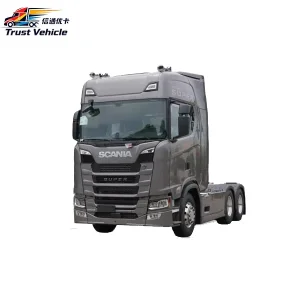
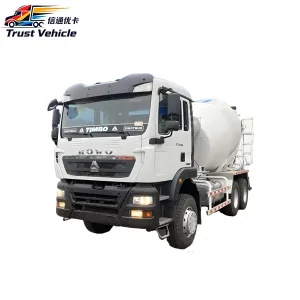
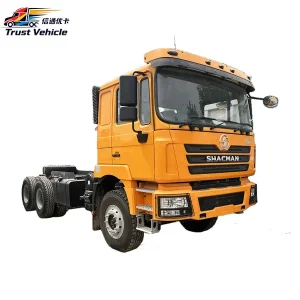
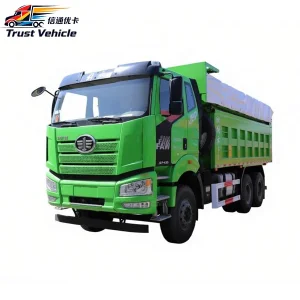
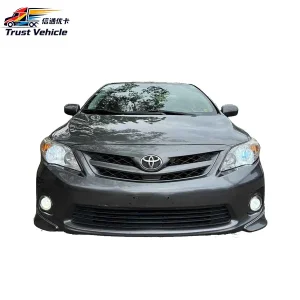
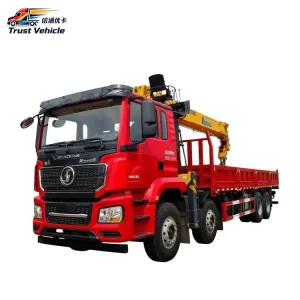
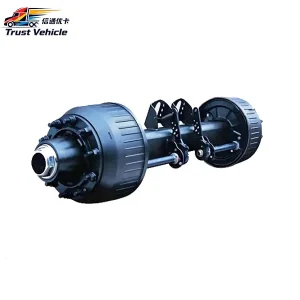
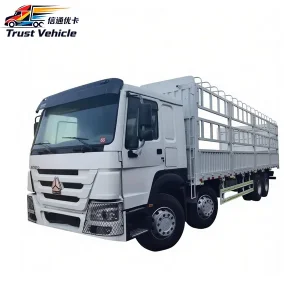
Shijiazhuang Trust Vehicle Industry Co., Ltd was established in 2025 and is headquartered in Shijiazhuang, Hebei Province. It is a comprehensive enterprise focusing on the export of used commercial vehicles, used cars, and used engineering vehicles. Relying on the advantages of the largest commercial vehicle industry cluster in northern China, the company integrates high-quality vehicle sources in the Beijing-Tianjin-Hebei region and is committed to providing global customers with cost-effective vehicle procurement, maintenance and modification, export logistics, and after-sales support one-stop services.
For fleet operators and trailer parts suppliers across Kazakhstan, Shijiazhuang Trust Vehicle Industry Co., Ltd offers a direct path to acquiring premium commercial assets. The company's deep regional knowledge of the EAEU customs processes, combined with its direct linkages to leading Chinese spare parts manufacturing facilities, ensures that every truck and trailer exported is paired with ECE R55-compliant coupling assemblies (including heavy-duty kingpins and axles) optimized for severe winter operation.
"By merging used vehicle sourcing with new trailer components and kingpin supply, we give Kazakh logistics businesses the tools they need to build rugged, cost-effective fleets."